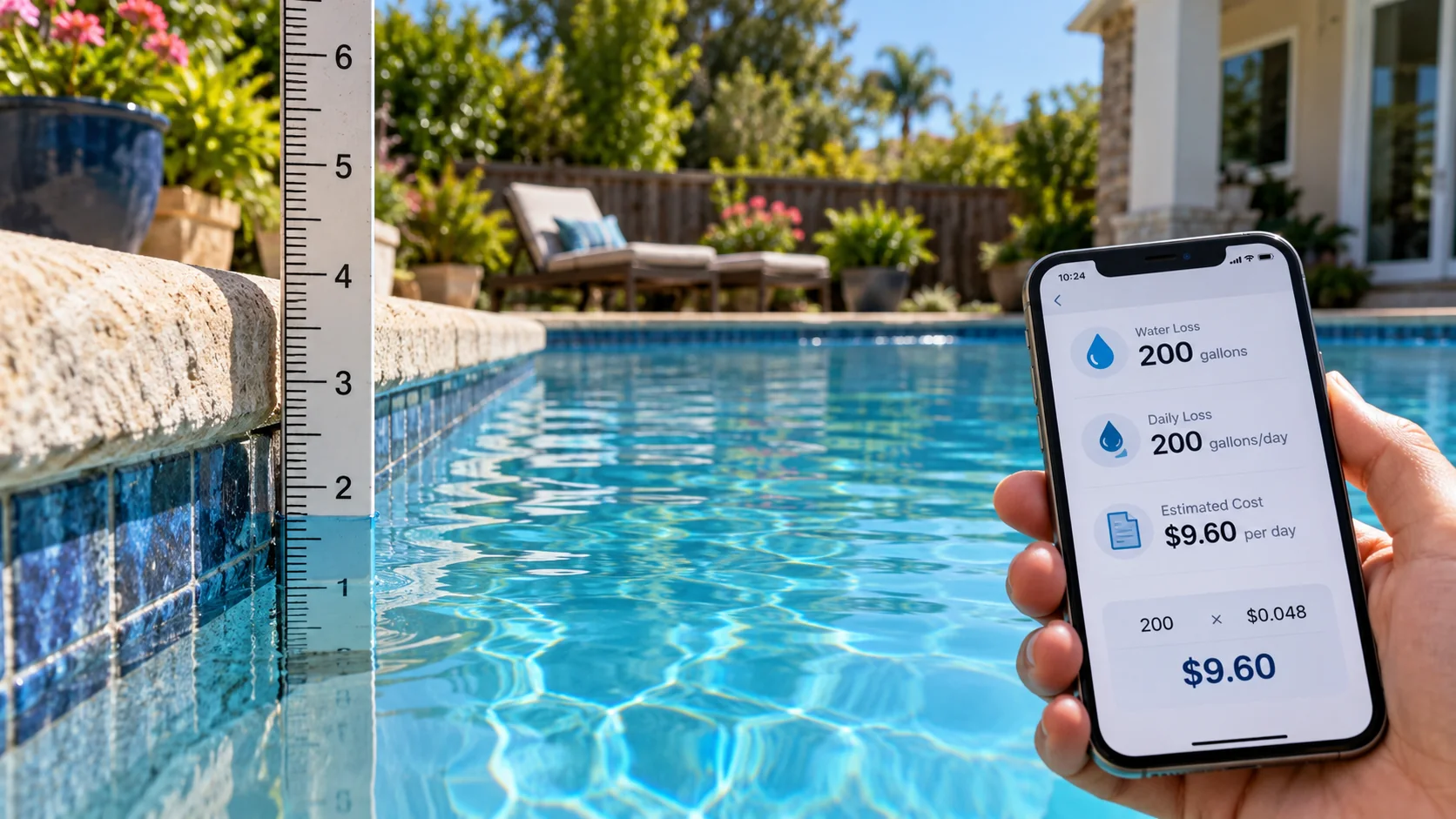
Why identifying the water-loss pattern matters
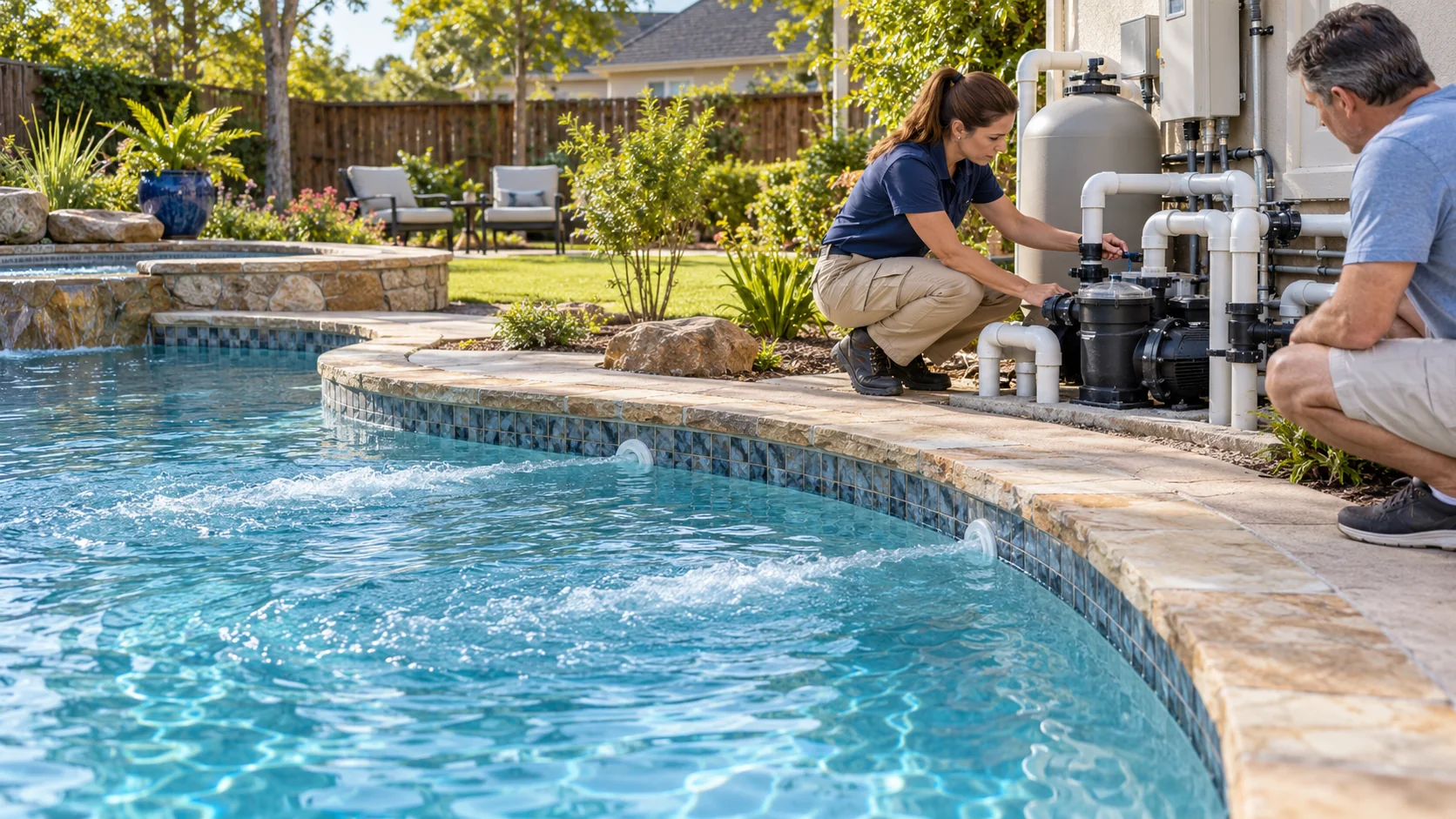
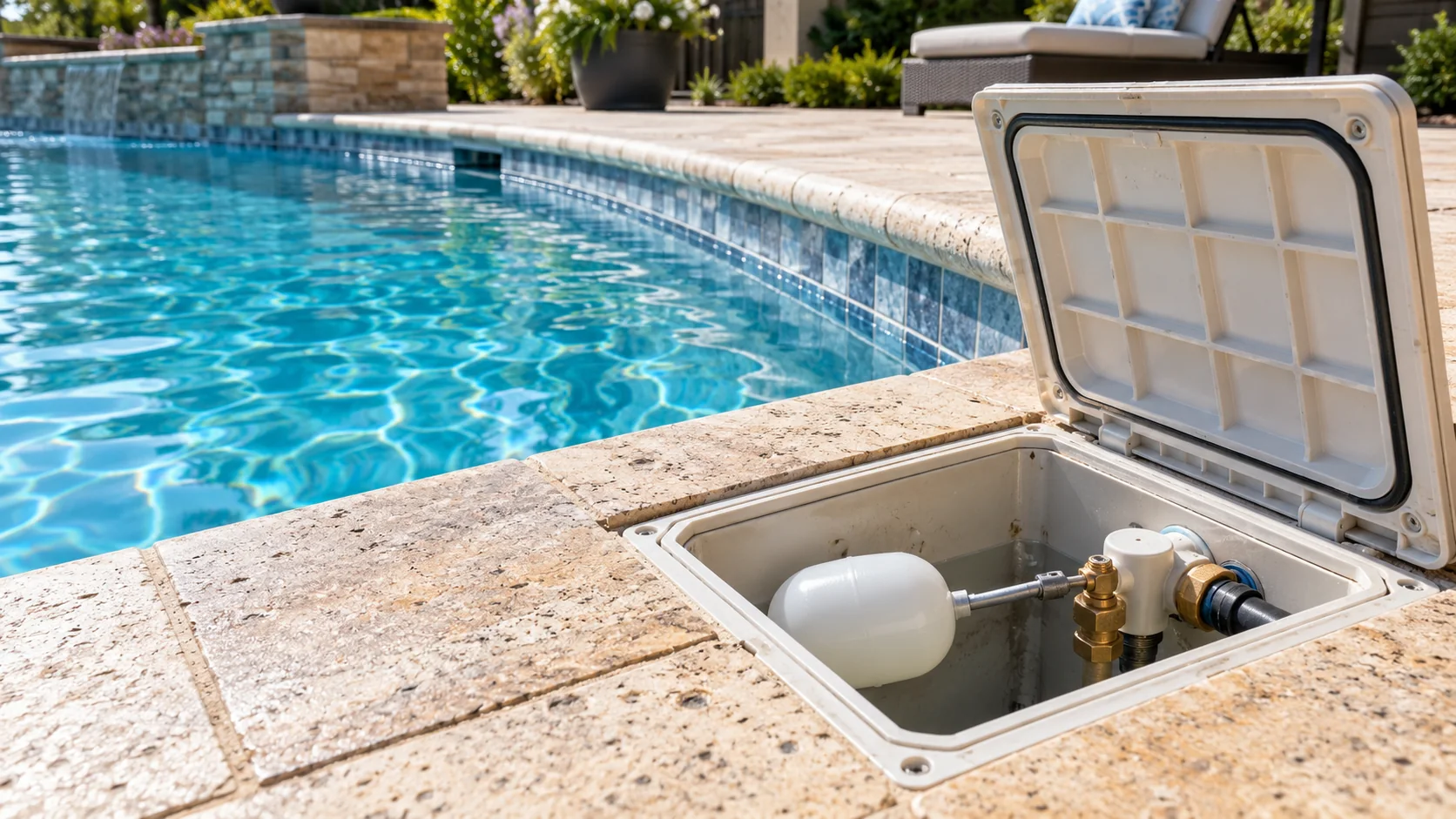
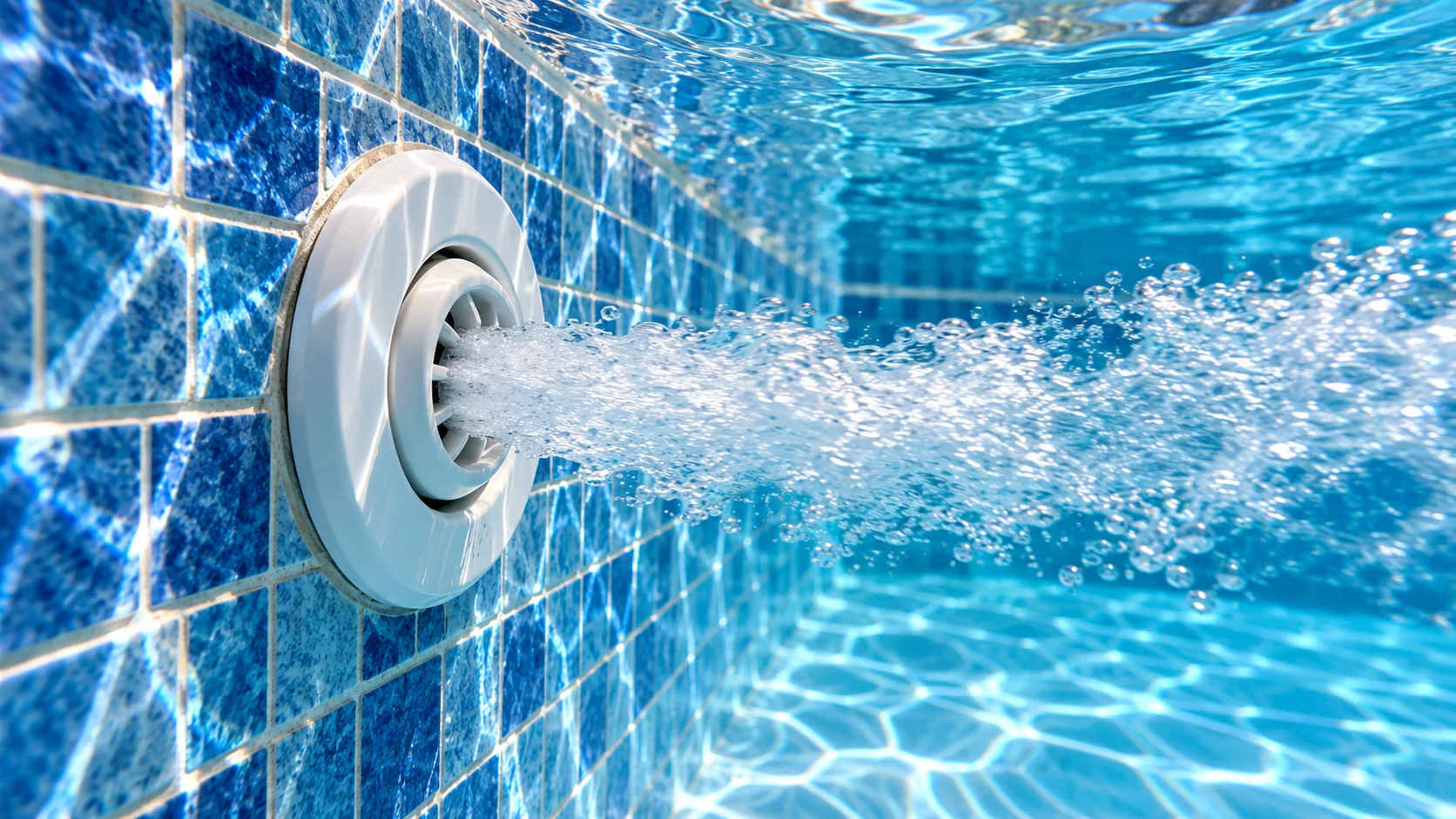
A swimming pool is not one single watertight component. Water travels through suction lines, a pump and filter, return lines, fittings and often an attached spa or water feature. If the water level drops unexpectedly, the first job is to understand the pattern rather than assume every problem needs the same repair.
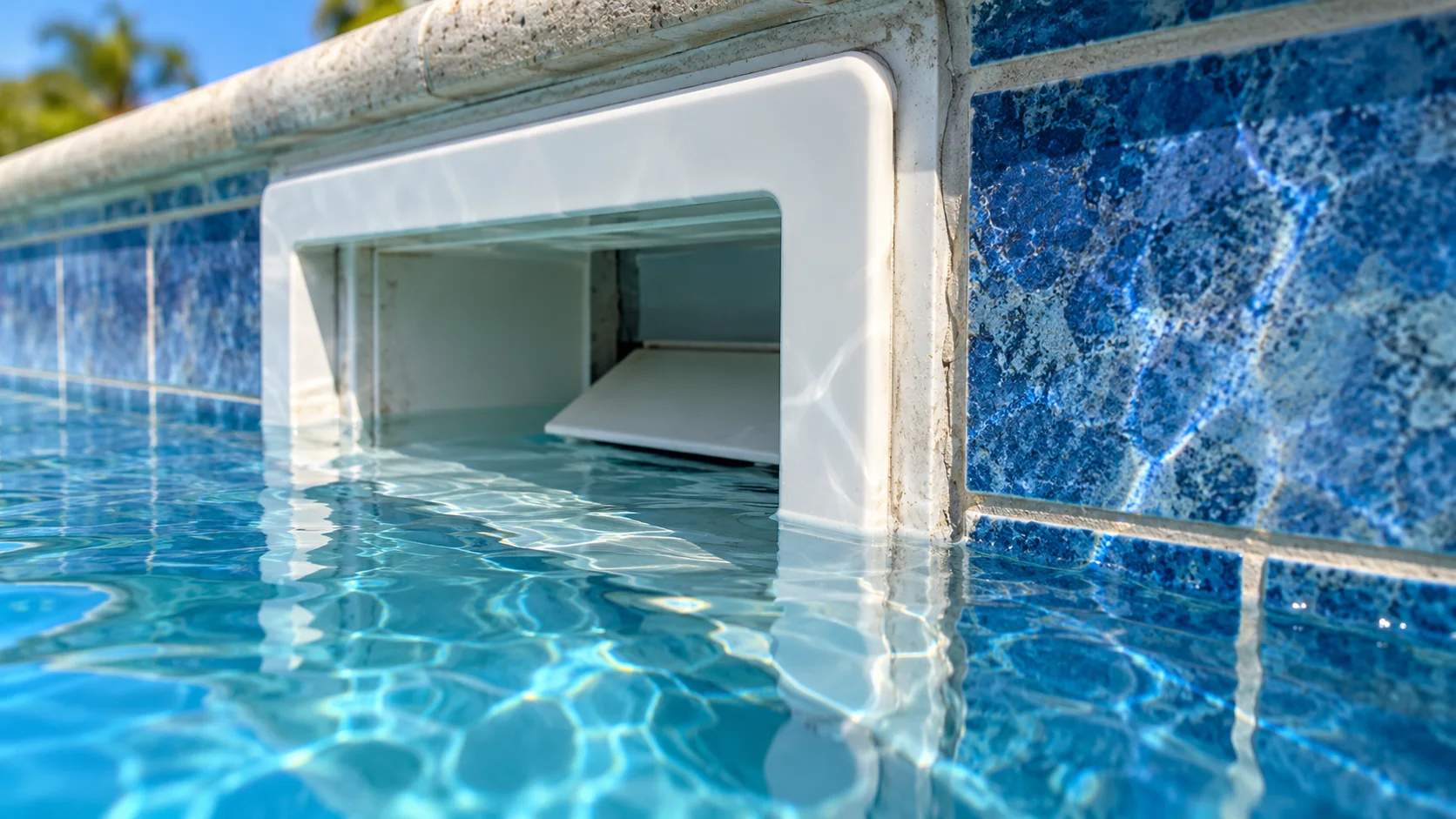
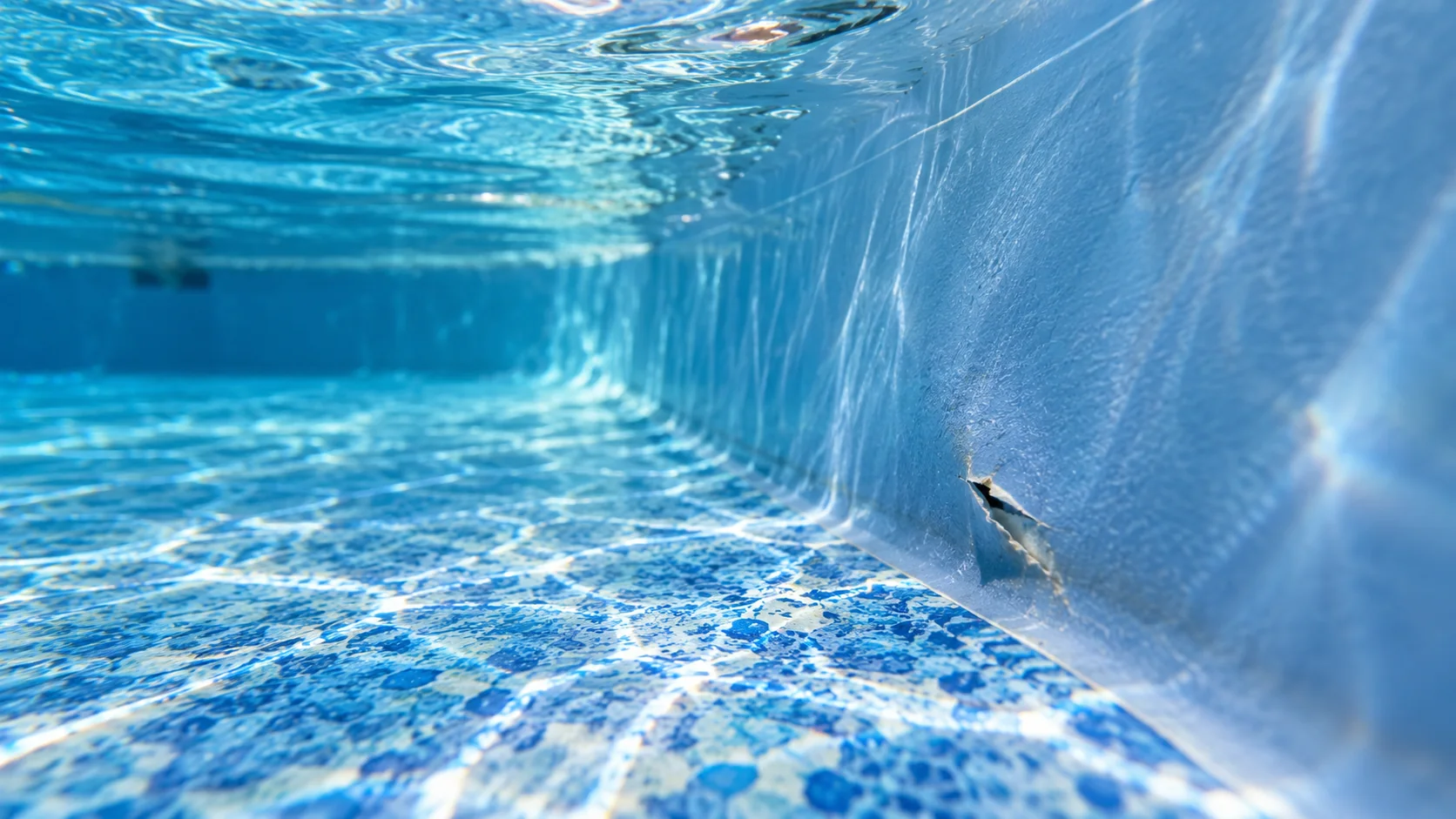
Water loss that increases while the pump runs may prompt a different inspection from a skimmer-level drop, a constantly running autofill or a raised spa that drains into the pool overnight. Some symptoms involve actual water leaving the property; others involve water transferring between connected vessels or leaving through a faulty overflow. Identifying that distinction early can make a technician's visit more useful.
How to move from an observation to a useful estimate
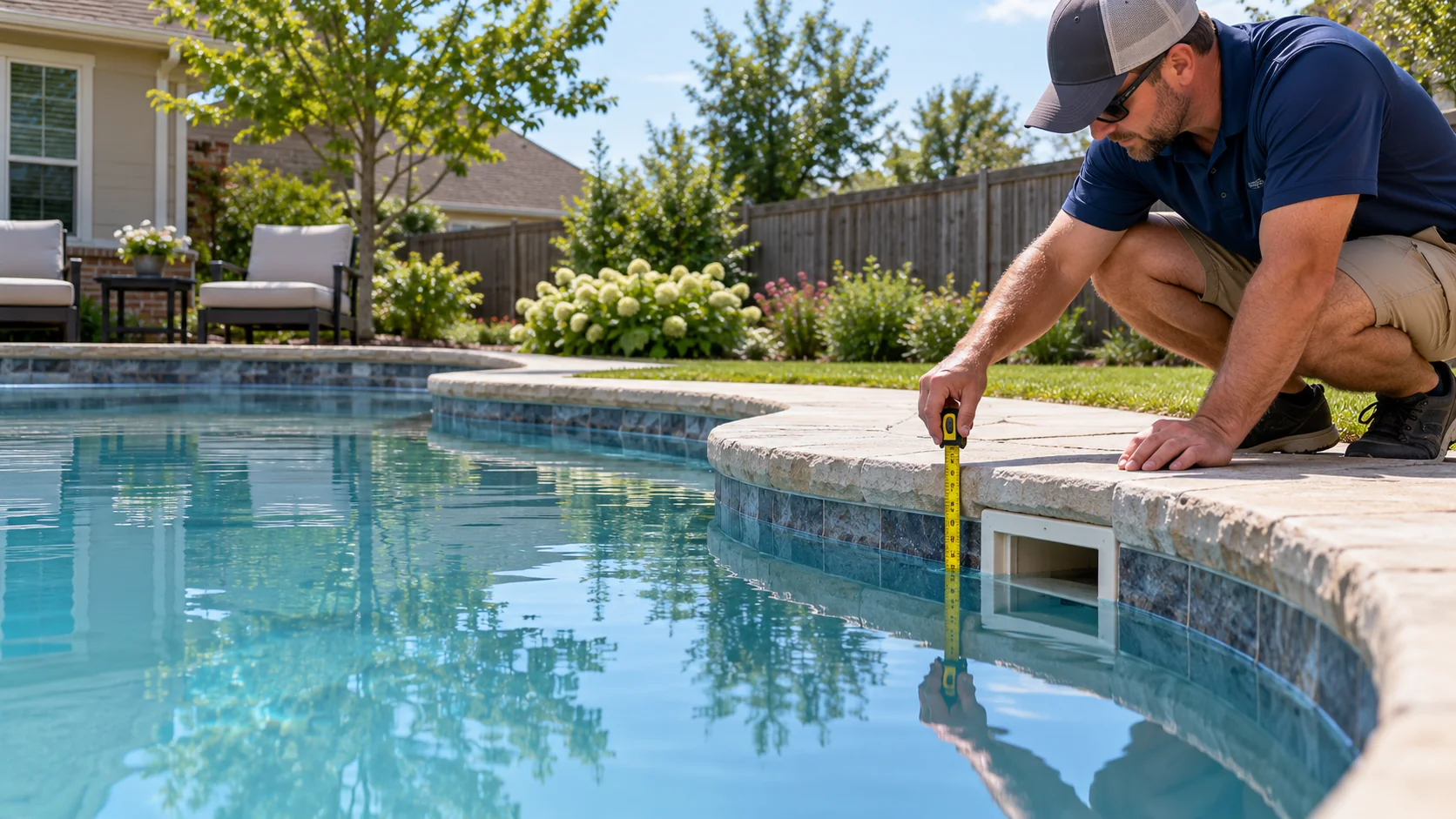
Start with notes about the waterline, pump schedule, refill system and nearby wet areas. A controlled bucket comparison can help assess whether the pool loses more water than a container exposed to similar weather conditions. This is not a leak-location diagnosis, but it provides evidence that can guide the next decision.
Our pool leak detection cost planner explains inspection scope and price factors. A suspected underground return line usually involves different equipment and access considerations from an accessible equipment fitting. Always request a written local estimate because national planning figures are not a promise about a particular property.
When should you compare specialists?
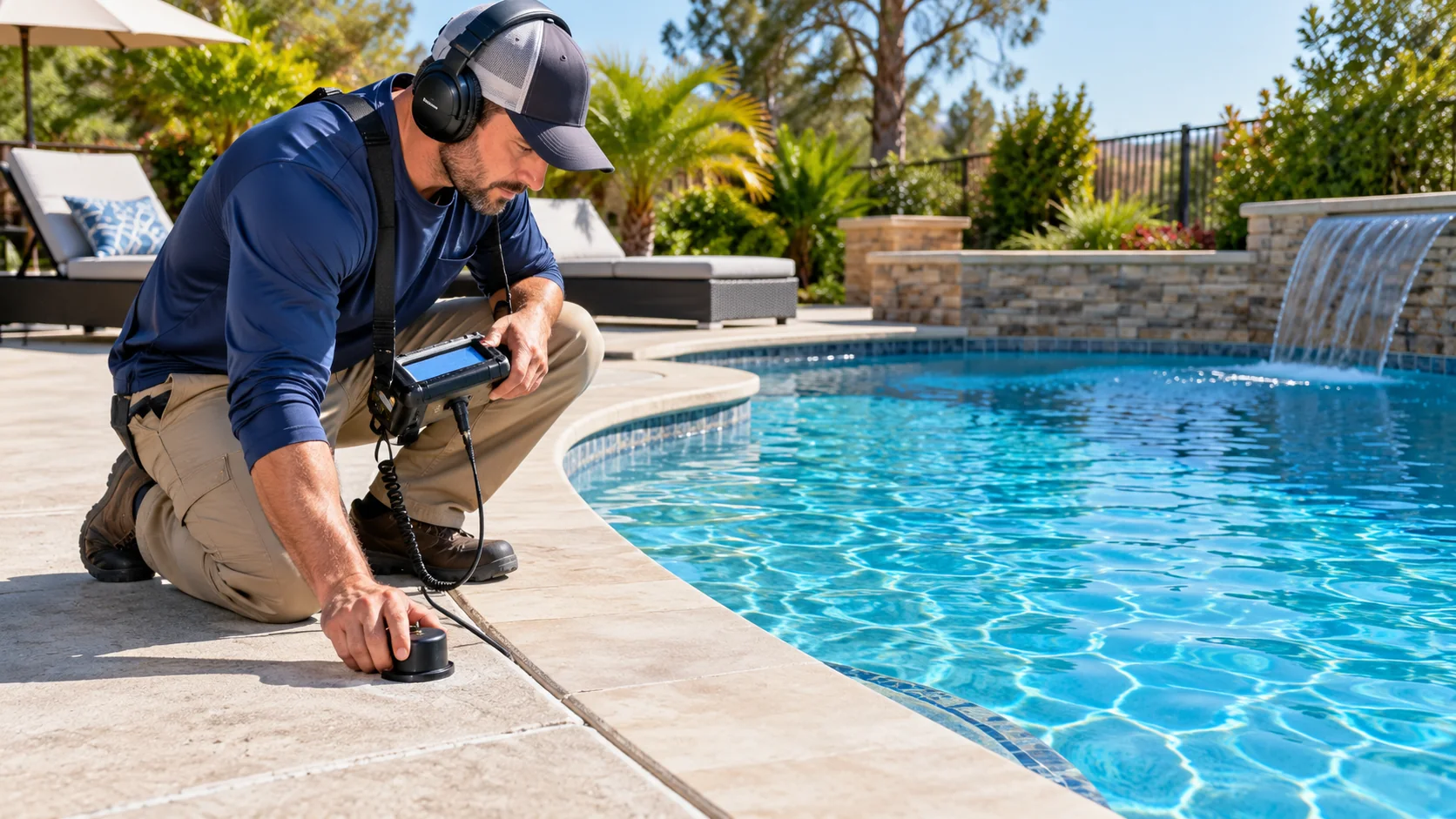
Professional help is reasonable when controlled observations show repeated unexplained excess water loss, when electrical equipment presents a safety concern or when there are signs of moisture-related damage. Explain what you have already measured, describe your pool construction and ask what specific circuits or features the provider expects to inspect. A useful visit should explain which possibilities were tested, what remains uncertain and which repairs are separate.
PoolLeakRadar maintains a limited, source-linked company directory covering selected US regions. The directory does not guarantee service to every ZIP code, real-time availability or independent licensing verification. Contact each listed company to confirm coverage, qualifications and the scope of the visit before booking.
Make the evidence work for you
These articles are educational resources, not a substitute for an on-site diagnosis. Their purpose is to make the early questions easier: what changes when the pump runs, which component may be involved and how much water could be lost? The next step should follow what the evidence actually supports, not whichever repair sounds most urgent.