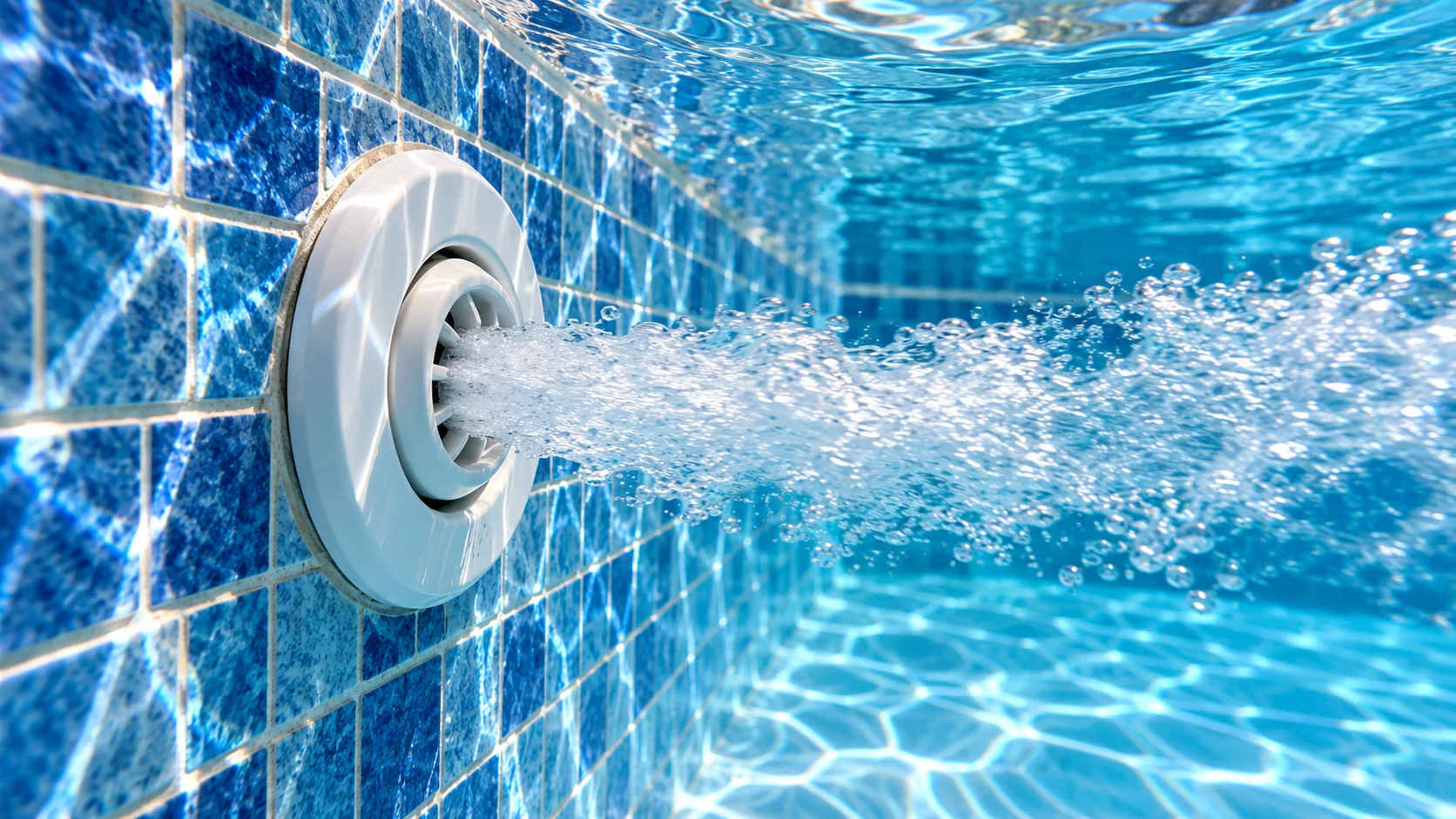
A pool return line leak occurs when water escapes from piping that carries filtered water back into the swimming pool. These pipes operate on the pressure side of the circulation system, downstream of the pump. A damaged return pipe or connection may release water while the pump runs, even when the defect is concealed underground.
Return-line problems are important to investigate because they can resemble defects at the filter, heater, valves or other equipment. A pool that loses water faster during circulation does not necessarily have a broken buried pipe. The initial objective is to determine which part of the pressure-side system is actually losing water.
Plan a detection budget, then compare relevant specialists before authorizing repairs.
What Is a Pool Return Line?
After the pump draws water from the pool, the circulation system moves it through the filtration equipment and back toward the return fittings. Depending on the installation, this path may include a heater, sanitizer, valves or additional plumbing for water features. The return lines typically run underground between the equipment area and the pool.
A leak can develop at a pipe joint, fitting, damaged pipe section or transition between components. Material age, ground movement, freezing conditions and installation quality can influence the likelihood of failure. However, the visible age of a pool does not establish which component has failed.
Five Signs That May Point to a Return-Line Problem
- Water loss increases while the pump runs. Positive pressure can increase leakage through a damaged return pipe or connection.
- The pool repeatedly needs additional water. A hidden defect may release water without leaving an obvious surface puddle.
- Unusual wet areas appear near a probable pipe route. Escaping water may migrate through soil before becoming visible.
- Water loss changes when a specific feature operates. A spa spillover, cleaner or water feature may use a separate pressure-side circuit.
- An equipment connection visibly leaks. The source may be accessible plumbing rather than a buried return pipe.
These clues do not provide a confirmed diagnosis. A pressure-side problem and a pool shell leak can exist at the same time, and operating conditions can change the apparent rate of loss.
Return-Line Leak or Suction-Line Leak?
The difference matters because the pressure behavior of the two systems is not identical. Suction plumbing carries water toward the pump and may draw air through a defect during operation. Return plumbing carries water away from the pump and may expel water through an opening under positive pressure.
| Observation | Possible implication |
|---|---|
| Faster loss during circulation | Investigate return-side plumbing and operating equipment |
| Bubbles or loss of pump prime | Investigate possible suction-side air entry and other causes |
| Loss continues with the pump stopped | Consider static plumbing, fittings and pool structure |
| Loss changes with a water feature | Investigate the feature's specific circulation circuit |
These patterns help select tests, but none identifies the failed component by itself. A specialist needs to consider the full plumbing arrangement.
How Is a Pool Return Line Tested?
The usual professional approach is to determine the relevant plumbing circuit and isolate it from other systems. Controlled pressure testing can then assess whether that section maintains pressure under the test conditions. If the test indicates leakage, the technician may use additional methods to find the damaged area.
Acoustic listening, pipe tracing or other specialized techniques may help narrow an underground location. The choice depends on pipe material, access, background noise and site conditions. A line that fails a pressure test does not automatically reveal the precise location of the break.
Pool owners should not attempt makeshift compressed-air pressure testing or remove plugs from pressurized equipment. Improperly handled pool plumbing can create serious injury hazards. Specialized testing belongs with trained personnel using appropriate procedures.
What Affects Return-Line Repair Costs?
An accessible equipment connection may require a relatively limited repair. A buried pipe beneath concrete, landscaping or other structures can involve significantly more labor and restoration. The number of affected circuits and the precision of the diagnostic findings can also influence the work required.
Request a quote that separates leak detection from repair, pipe access and surface restoration. If the contractor recommends replacing an entire line, ask why that approach is preferable to repairing the confirmed section. The estimate should describe how successful repair will be verified.
Preparing for a Professional Inspection
Before contacting a specialist, record the water-loss pattern and whether it changes during different equipment modes. Note recent plumbing work, valve changes or freeze-related damage if relevant. Photographs of the equipment pad and suspected wet areas may help the contractor assess the likely scope.
A preliminary bucket test can help establish the amount of water loss beyond evaporation. The technician can then use that baseline together with pressure testing and other evidence.
A confirmed diagnosis should come before an expensive plumbing repair.
Estimate Pool Leak Detection Cost – Review the cost factors for a professional inspection.
Find a Pool Leak Specialist – Compare available providers and their published testing methods.
Frequently Asked Questions
Does a return-line leak get worse when the pump runs?
It may. Positive operating pressure can increase water loss through a damaged return pipe, although other defects can create similar patterns.
Can a return-line leak be underground?
Yes. Return pipes commonly run beneath soil or hardscaping between the equipment area and pool.
Is pressure testing enough to locate a broken return line?
Not always. Pressure testing helps identify a leaking circuit, while additional methods may be necessary to locate the precise defect.
Can a pool return line be repaired without replacing the entire pipe?
Sometimes. The condition, location and accessibility of the damaged section determine whether a localized repair is practical.