How to carry out a pool bucket test correctly
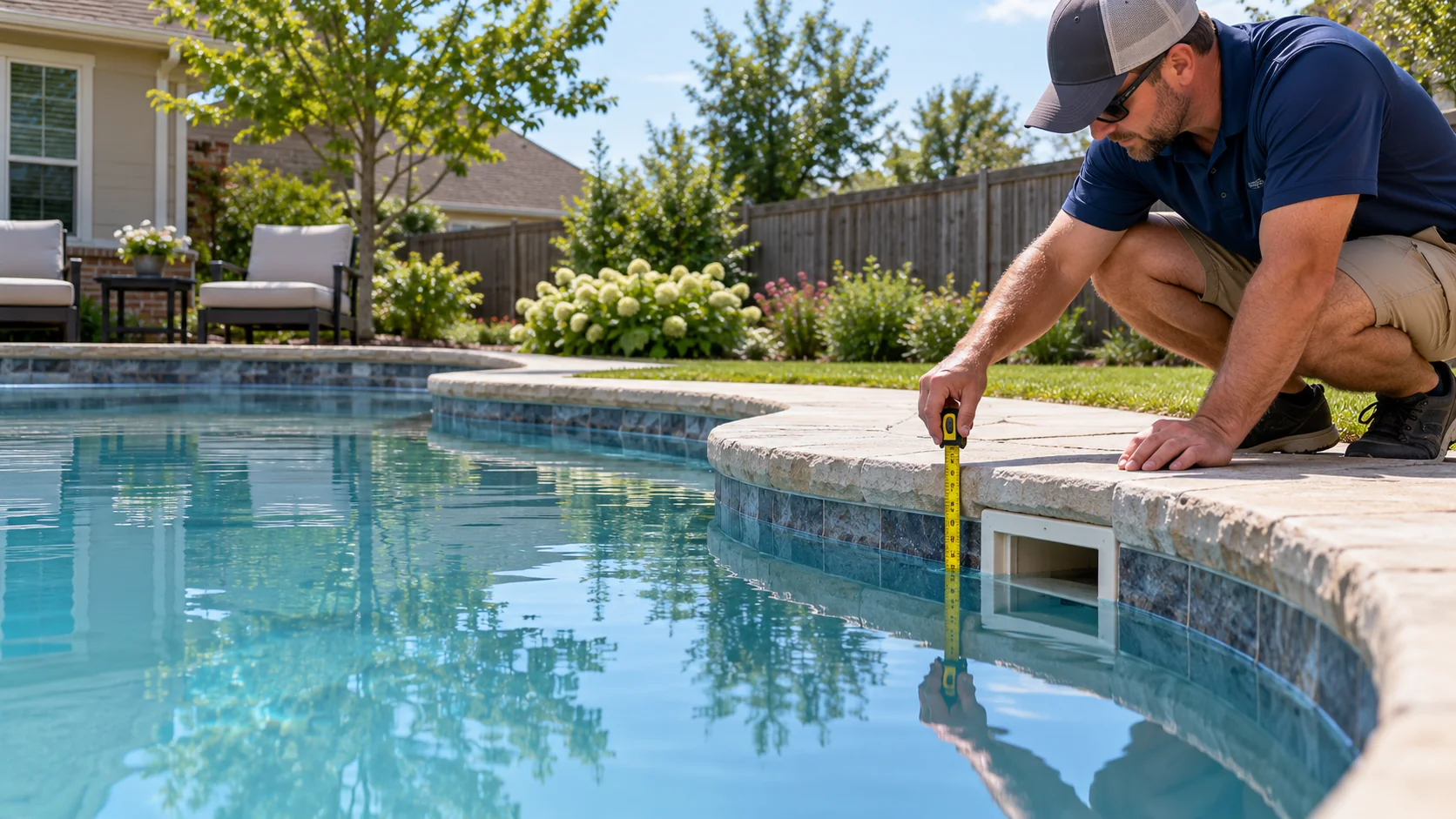
The pool bucket test is a practical way to separate evaporation from possible leakage. The US Environmental Protection Agency recommends setting a partially submerged bucket on a pool step, marking the waterline in both the pool and bucket and measuring again after a calm, unused period. Switch off autofill where safe, avoid rain and splashing, and follow the applicable equipment instructions. The comparison is about the change in level, not the initial pool volume.
What our calculator actually computes
First subtract the bucket drop from the pool drop. A positive difference suggests that the pool lost more water than the control bucket. The tool scales the difference to a 24-hour rate and multiplies it by the pool’s surface area. One inch of water over one square foot is approximately 0.6234 US gallons. Irregular pools require an estimated average surface width, so reported gallons are approximate.
Understanding the results
A near-zero reading suggests no clear excess loss under the conditions measured; it does not guarantee a pool has no intermittent leak. A positive difference can reflect true leakage, but also imperfect measurement, unusual wind and test disturbances. To avoid false certainty, the calculator labels the result as guidance and suggests repeating a pool bucket test when readings are borderline. Do not interpret a single number as a repair diagnosis.
Estimate the cost of lost water
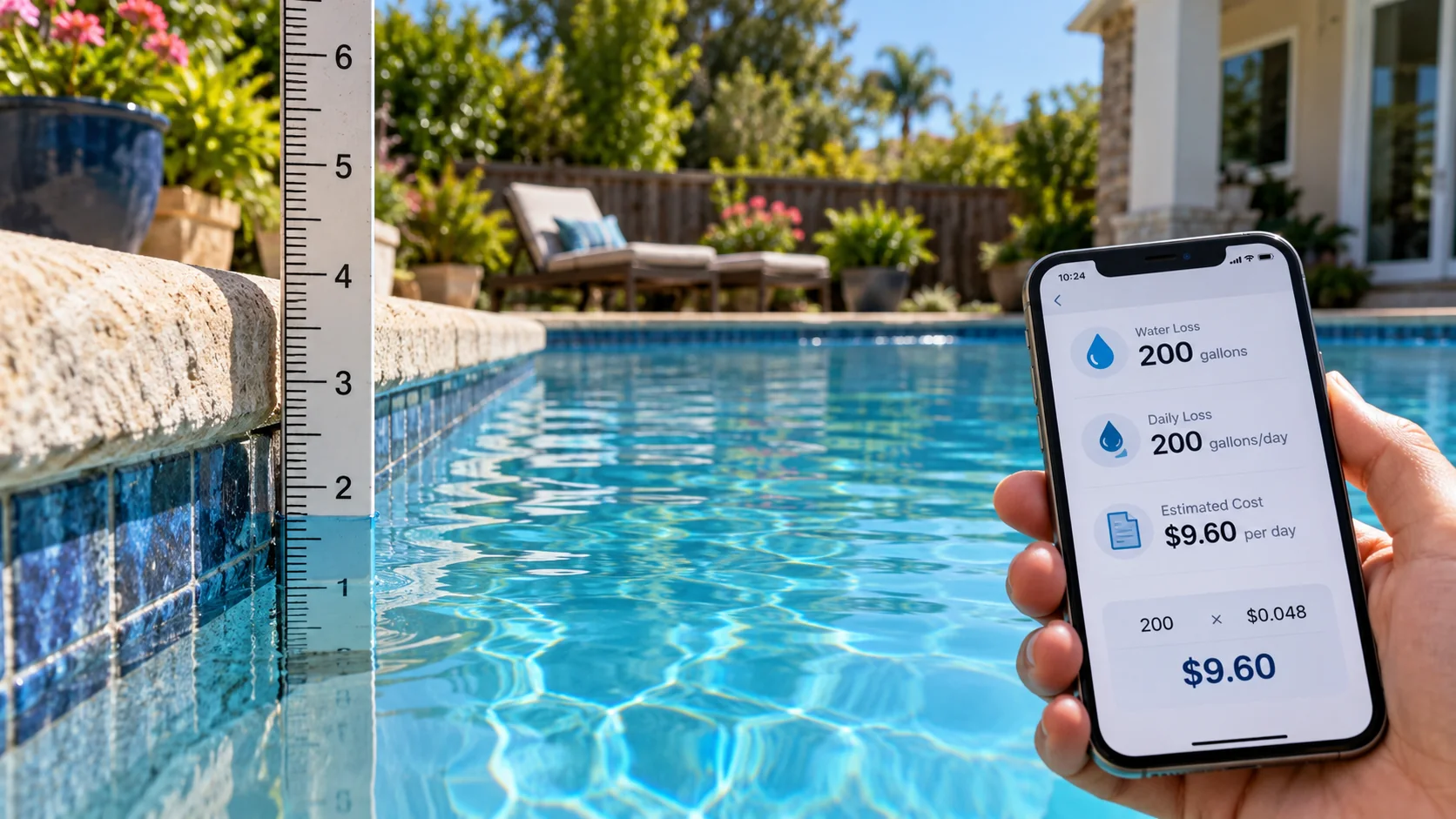
If you know your water tariff per thousand gallons, multiply the estimated daily excess volume by thirty days and your entered rate. This is water only: sewer charges, refill restrictions, heating, chemicals and any repair bill may change the real financial impact. Enter zero for the rate if you only need gallons. The calculator never contacts a utility company or retrieves private billing data.
What to do if the pool keeps losing water
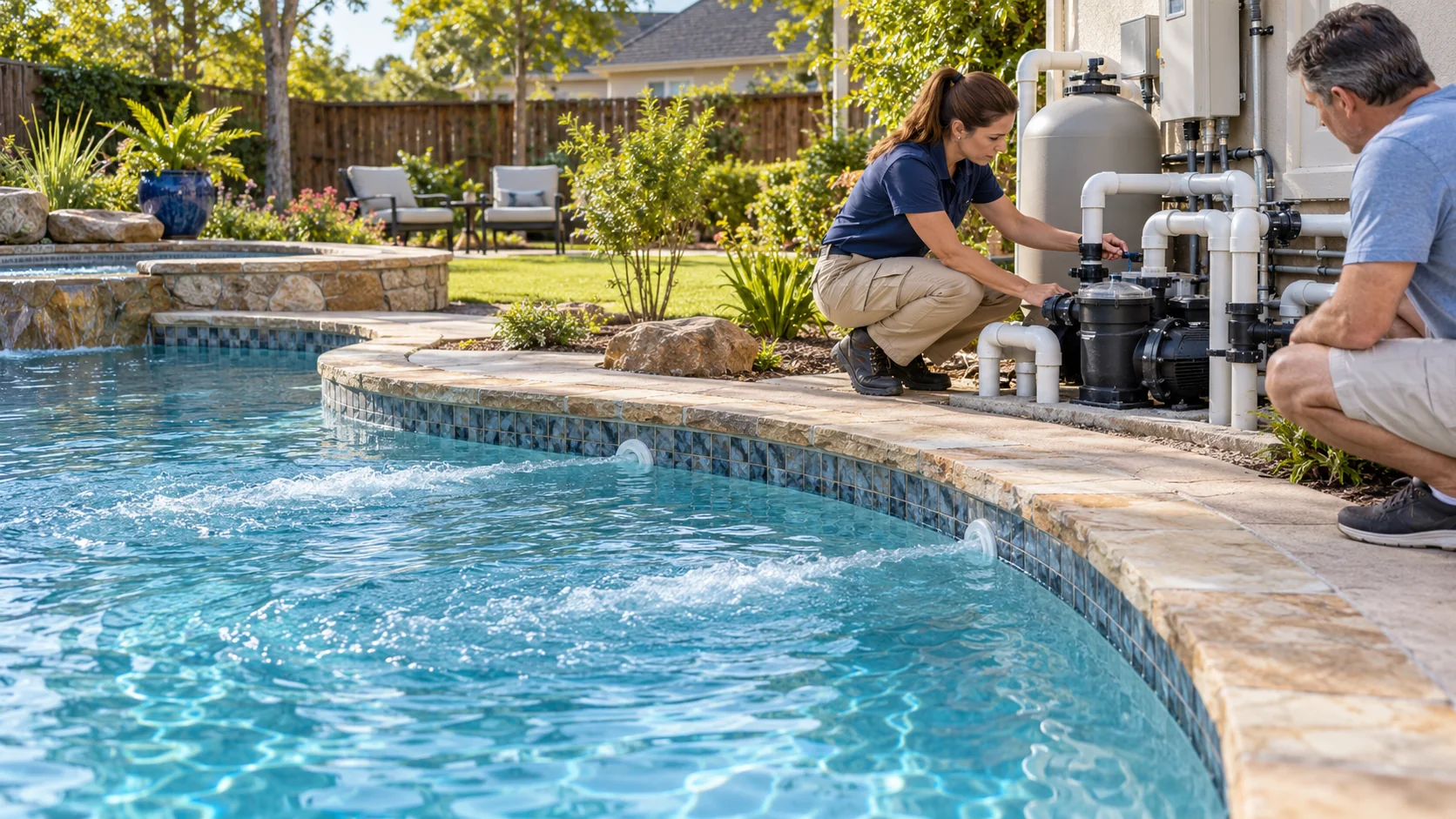
Record the results, including test duration and pump conditions, then read our pool leak warning signs. A specialist may investigate fittings, lines and the shell using the appropriate professional methods. If repeated pool bucket test results show excess loss, consult a local company rather than repeatedly adding water or attempting potentially unsafe equipment work. Browse the US starter directory for source-backed providers.
Example: interpreting real measurements
Imagine a rectangular pool measuring 30 feet by 15 feet. Over 24 hours, the pool water drops 0.50 inches while the control bucket drops 0.20 inches. The excess difference is 0.30 inches a day. Multiplying by 450 square feet and approximately 0.6234 US gallons per square-foot-inch yields about 84 gallons of estimated additional daily loss. The result is only as good as your measurements and the surface-area estimate.
| Measurement | Example | What can affect it |
|---|---|---|
| Pool drop | 0.50 in | Rain, splash-out, refill valve, wave action |
| Bucket drop | 0.20 in | Bucket stability, wind exposure, spill |
| Elapsed time | 24 hours | Accurate start and end timestamps |
| Surface area | 450 sq ft | Irregular pool outline |
Why a negative or zero difference is not a clean bill of health
If the control bucket loses equal or more water than the pool, the tool reports no measured excess loss in that comparison. A leak might still occur only while the pump runs, only when the waterline reaches a fitting, or during certain pressure conditions. Repeat the test when circumstances change, and do not bypass safety equipment or deliberately drain your pool to manufacture a better reading.
Save a useful summary for your appointment
After calculating, use Copy summary to put the measurements and estimates on your clipboard. The new Download report control saves a simple local text file containing your readings; no account or server upload is required. You can share it with a specialist together with photographs and a description of the circulation schedule. For questions to ask next, open the hiring guide.
How a pool bucket test supports a service decision
The pool bucket test is a controlled comparison rather than an automatic leak diagnosis. If the pool level drops more than the bucket level over the same interval, the difference suggests water loss beyond evaporation. The U.S. EPA recommends testing in a rain-free, low-wind period with pool systems turned off according to safe operating instructions. Heavy use, storms and refill devices can distort the reading.
Why exact measurements matter
Record both level changes in the same unit, measure the test duration and estimate the pool surface area. The calculator converts a depth difference into an approximate volume using one inch of water over one square foot as roughly 0.623 gallons. A positive value is an estimate of excess loss, not proof of a specific broken pipe. Repeat the pool bucket test if the result conflicts with your observations.
| Result pattern | What it can suggest | Appropriate follow-up |
|---|---|---|
| Similar loss in pool and bucket | Evaporation may explain much of the change | Repeat if concern remains |
| More loss from the pool | Possible loss beyond evaporation | Save readings and consider inspection |
| Rain, refill or swimming during test | Unreliable comparison | Restart under better conditions |
Bring the pool bucket test report to a contractor along with observations about pump operation and visible water around fittings. It gives the technician a better starting point and helps you decide whether professional pool leak detection services may be warranted. A negative result does not permanently rule out an intermittent problem.
Why a good pool bucket test is a controlled experiment
The pool and bucket lose water to the same air over a similar period, so the bucket acts as a local evaporation reference. This is more reliable than applying a blanket claim that any fixed loss above a quarter inch must be a leak. But it remains a comparison, not a laboratory instrument: strong wind, splashing, rain or mismatched exposure can change the readings. Repeat the test under more stable conditions before drawing conclusions about a costly excavation.
The EPA's published homeowner procedure describes a 24-hour test in calm, rain-free weather with a partly submerged bucket and starting levels marked carefully. The guidance calls for systems, including automatic fills, to be shut down during that test. PoolLeakRadar cannot determine whether stopping circulation is safe for your specific pool, so never override equipment instructions, sanitation requirements, freezing protection or other safety safeguards. If a proper test is not safely possible, collect observations and speak with a qualified pool professional.
Example: converting the readings into water loss
Suppose the pool drops 0.75 inch during 24 hours and the bucket drops 0.25 inch. The excess is 0.50 inch in that period. For a rectangular pool with a 20-by-40-foot surface, the estimated excess volume is 0.50 × 800 × 0.6234, or approximately 249 gallons per day. A 30-day projection would be about 7,480 gallons if the rate remained steady, but actual loss can vary with water level, pump operation, weather and time.
| Observation | What it can mean | Next step |
|---|---|---|
| Pool loses more than bucket | Potential excess loss after evaporation adjustment | Repeat and document conditions; inspect if persistent |
| Pool and bucket fall equally | Evaporation may explain the tested interval | Monitor for intermittent or level-dependent loss |
| Water rises during rain | Measurement no longer isolates evaporation | Restart after stable weather |
| Autofill refills the pool | Observed pool drop can be artificially reduced | Use a safe controlled method or ask a technician |
| Very low water near skimmer | Possible equipment risk if circulation continues | Follow manufacturer safety guidance; seek professional help |
How to describe measurement uncertainty
Pool edges are not always level, rulers have finite precision and water can ripple around the marker. Write down the exact measurement units and how the start and finish marks were taken. If the calculated excess is very small, that uncertainty may be larger than the difference you are trying to interpret. Our calculator deliberately avoids diagnosing the precise location and cannot establish that a negative or zero reading rules out an intermittent leak.
What to take to a leak specialist after testing
Save both starting and ending levels, dates and times, approximate water surface dimensions and a note about weather and pump schedules. Include whether the autofill was active and what happened around filter backwashing, swimmers or recent rain. If another test gives a different result, keep both instead of deleting the less dramatic measurement. The complete history may help a technician decide whether to prioritize plumbing, fittings, shell inspection or other causes.
Frequently asked questions
How long should I leave a bucket test?
A calm 24-hour comparison is commonly recommended. Follow relevant local water authority guidance and repeat if rain or pool use affected the test.
Can a bucket test tell me where the leak is?
No. It only compares water-level changes. Finding the source may require professional inspection and targeted tests.
What if the bucket loses more water than the pool?
This does not show excess pool loss under that test. Review setup and repeat if the result conflicts with other symptoms.
Editorial references: US EPA pool water efficiency / bucket test, City of Tampa: how to check for pool leaks, HomeGuide: leak detection cost research, Angi: 2026 pool leak detection cost. Reference guidance and price figures may change; verify current information.