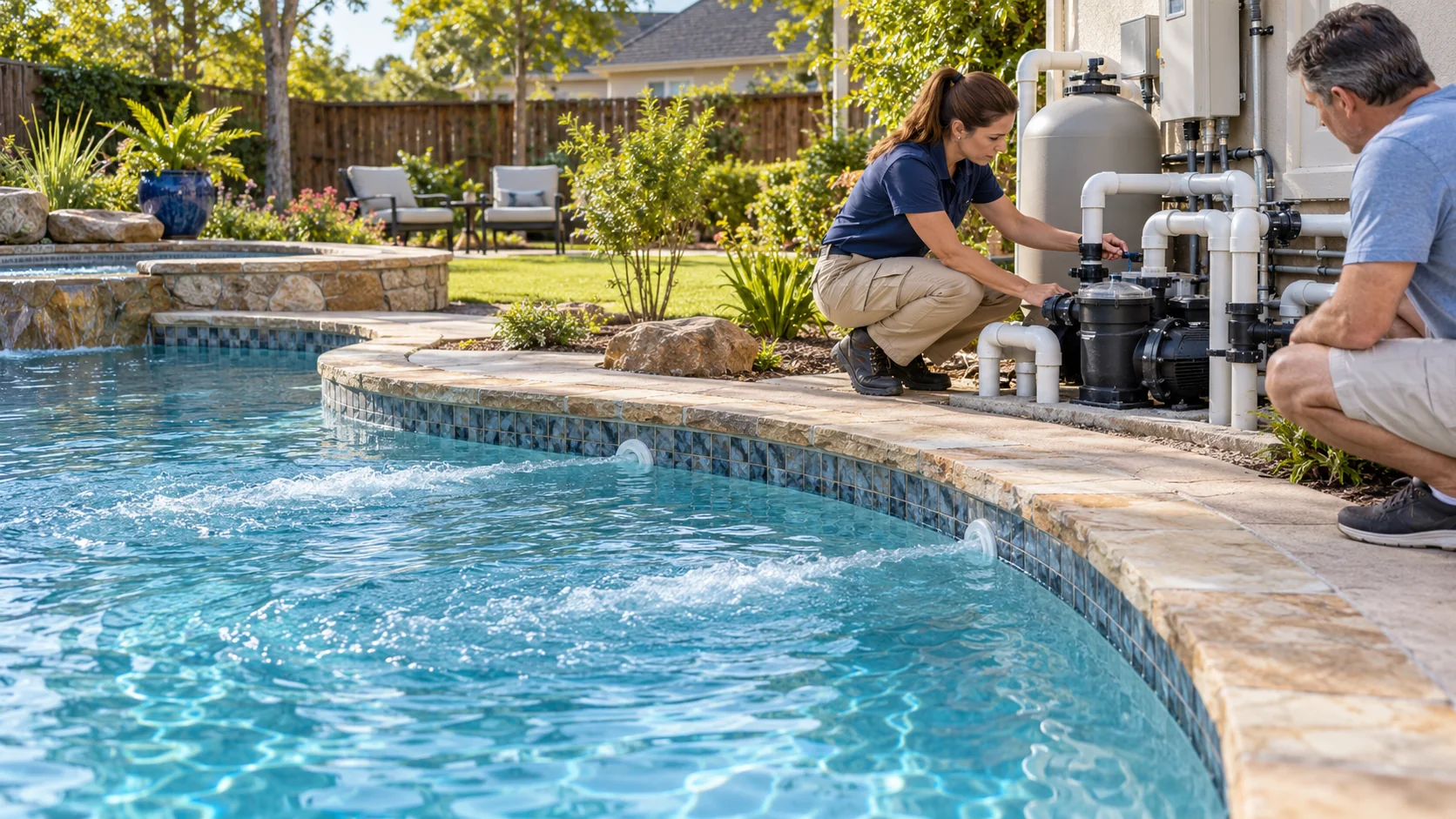
A pool losing water when the pump is running may have a leak in its pressure-side plumbing, a failing equipment connection or another problem that becomes more noticeable during circulation. When the pump operates, water is pushed through the filter, heater, return pipes and fittings. An opening in part of that system can release more water under operating pressure than when the equipment is switched off.
This pattern is an important diagnostic clue, but it does not identify a particular broken pipe. Water features, filter waste lines, evaporation and existing shell defects can complicate what appears to be a simple pump-related problem. The useful next step is to measure the difference rather than assume that the return plumbing is responsible.
Plan a detection budget, then compare relevant specialists before authorizing repairs.
Why a Pool May Lose More Water With the Pump On
Pool circulation has two main plumbing sections. The suction side carries water from the pool toward the pump, while the pressure side carries it back through the filtration equipment and return fittings. With the pump running, these sections operate under different pressures.
A leak on the pressure side may become more active during circulation because water is forced through the damaged area. This can happen at an underground return pipe, an equipment connection, a valve or another pressurized component. However, the same observation can also occur if running equipment sends unwanted water through a waste connection or activates a leaking water feature.
Common problems worth investigating
| Possible source | Clues worth checking | Professional assessment |
|---|---|---|
| Return plumbing | Water loss increases with circulation | Isolate and pressure-test return circuits |
| Filter or valve connection | Visible dripping or water near equipment | Inspect connections and valve operation |
| Waste or backwash line | Water leaving the system during normal filtering | Check valve sealing and discharge routing |
| Water feature plumbing | Loss appears when a waterfall or fountain operates | Test the feature circuit separately |
| Pool shell or fitting | Water loss persists with the pump off | Inspect the structure and penetrations |
The table describes investigation priorities, not confirmed diagnoses. A technician may need several tests to distinguish an underground plumbing defect from an unrelated water-loss problem.
How to Check Whether Pump Operation Changes Water Loss
Begin by recording the normal waterline and pump schedule. If conditions are suitable, perform a controlled bucket comparison to account for evaporation. The pool and bucket must be measured over the same interval, with rain, heavy wind, swimmers and automatic refill systems excluded as much as practical.
A second observation under a different pump condition may help identify whether circulation affects the excess loss. Compare similar time periods and note changes in operating mode, including attached spas, cleaners and water features. Do not run equipment dry, defeat safety controls or extend a pump shutdown beyond what the pool system can safely tolerate.
The PoolLeakRadar bucket test calculator can turn measured water-level differences into an estimated excess water loss. It cannot determine which pipe or fitting is leaking, but the measurements can help a specialist choose a starting point.
When the Return Line Becomes a Stronger Suspect
A return-line problem becomes more plausible when water loss repeatedly increases during normal circulation and other discharge routes have been ruled out. Wet ground near a buried pipe route or repeated unexplained loss may strengthen the reason to investigate. None of these signs proves that the leak is directly beneath the wet area.
A professional can isolate plumbing circuits and perform controlled pressure tests. If a line fails to hold pressure, additional locating methods may be needed to identify the damaged section before excavation. This separates evidence of a defective circuit from evidence of its precise location.
What to Tell a Pool Leak Specialist
Provide the pool type, the approximate water loss, the pump schedule and any differences observed with equipment running or stopped. Mention a recent filter service, plumbing repair or change in automation settings if one occurred. Photographs of wet areas and the equipment pad can help the technician prepare for the visit.
Ask whether the inspection includes return-line testing, equipment checks, a written report and a clear explanation of the repair options. Confirm whether locating and repairing the leak are separate services. The cheapest initial inspection is not necessarily the lowest total cost if additional visits or access work are excluded.
Ready for the next step?
Estimate Pool Leak Detection Cost – Review the factors that can affect the inspection budget.
Find a Pool Leak Specialist – Compare listed companies by supported location and advertised service.
Frequently Asked Questions
Does a pool losing water with the pump running always have a return-line leak?
No. Pressure-side plumbing is one possibility, but valves, equipment connections, water features and other defects can produce similar symptoms.
Can a pool pump itself cause water loss?
A pump or its connections may leak externally. Visible water at the equipment pad should be investigated separately from suspected underground plumbing loss.
Should the pump be turned off until the leak is found?
That depends on the equipment condition and pool requirements. If equipment is running dry, leaking near electricity or operating unsafely, stop using it and seek qualified assistance.
How much does it cost to locate a pool return-line leak?
The price depends on the inspection scope, location and testing needed. Use the cost planning guide for a preliminary budget and request a written local quote before authorizing work.