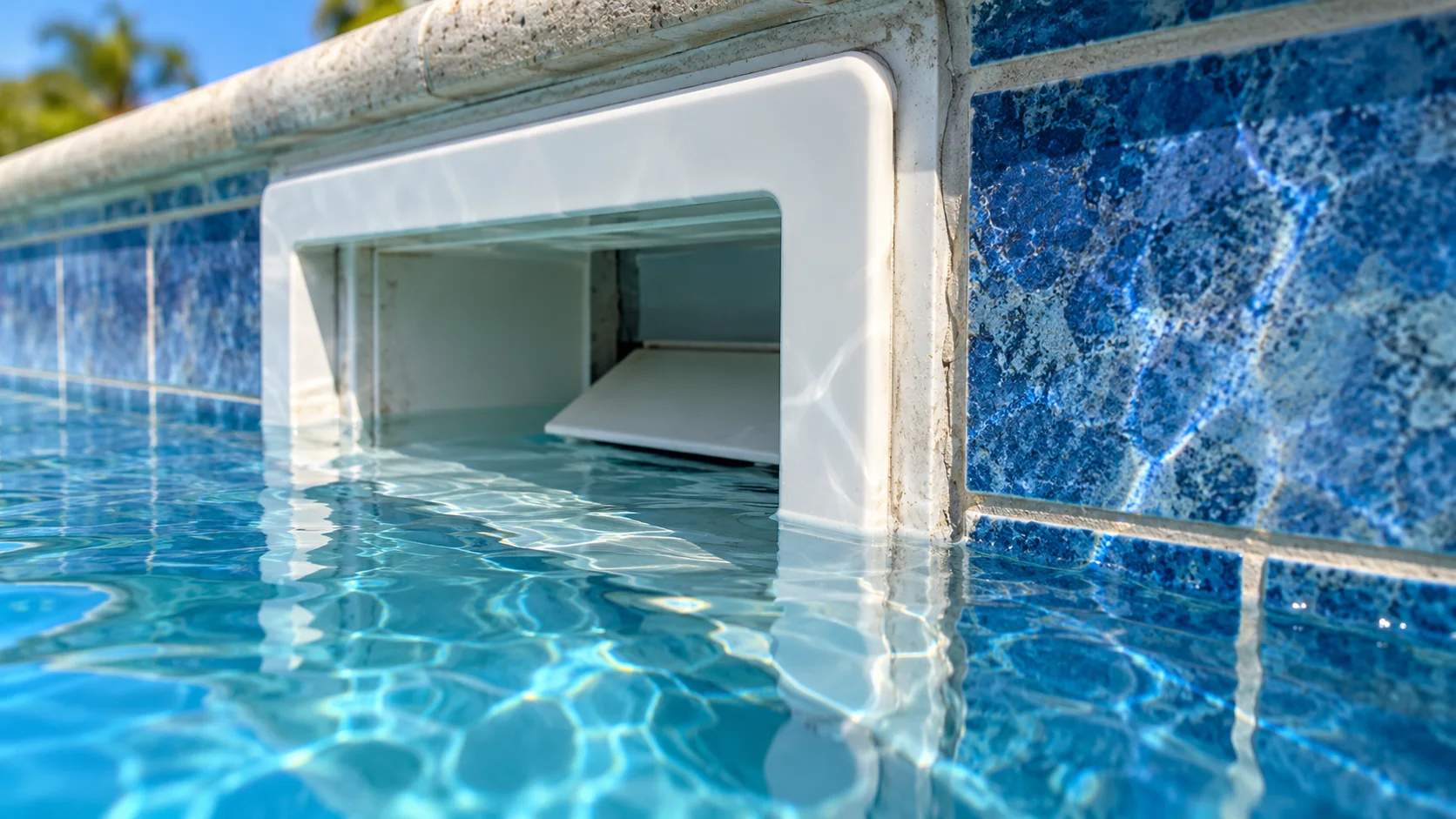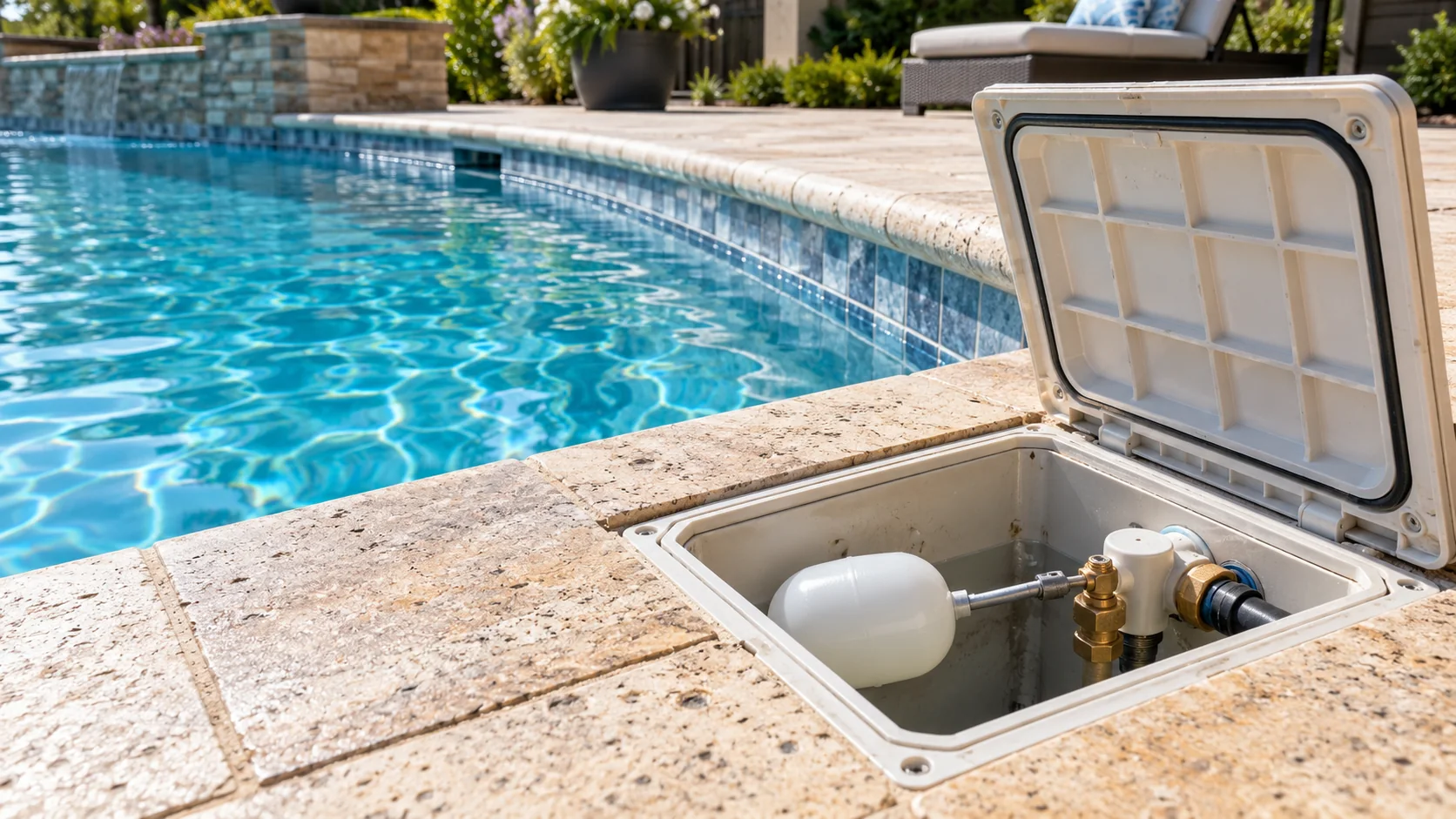
Persistent water loss is the clearest clue
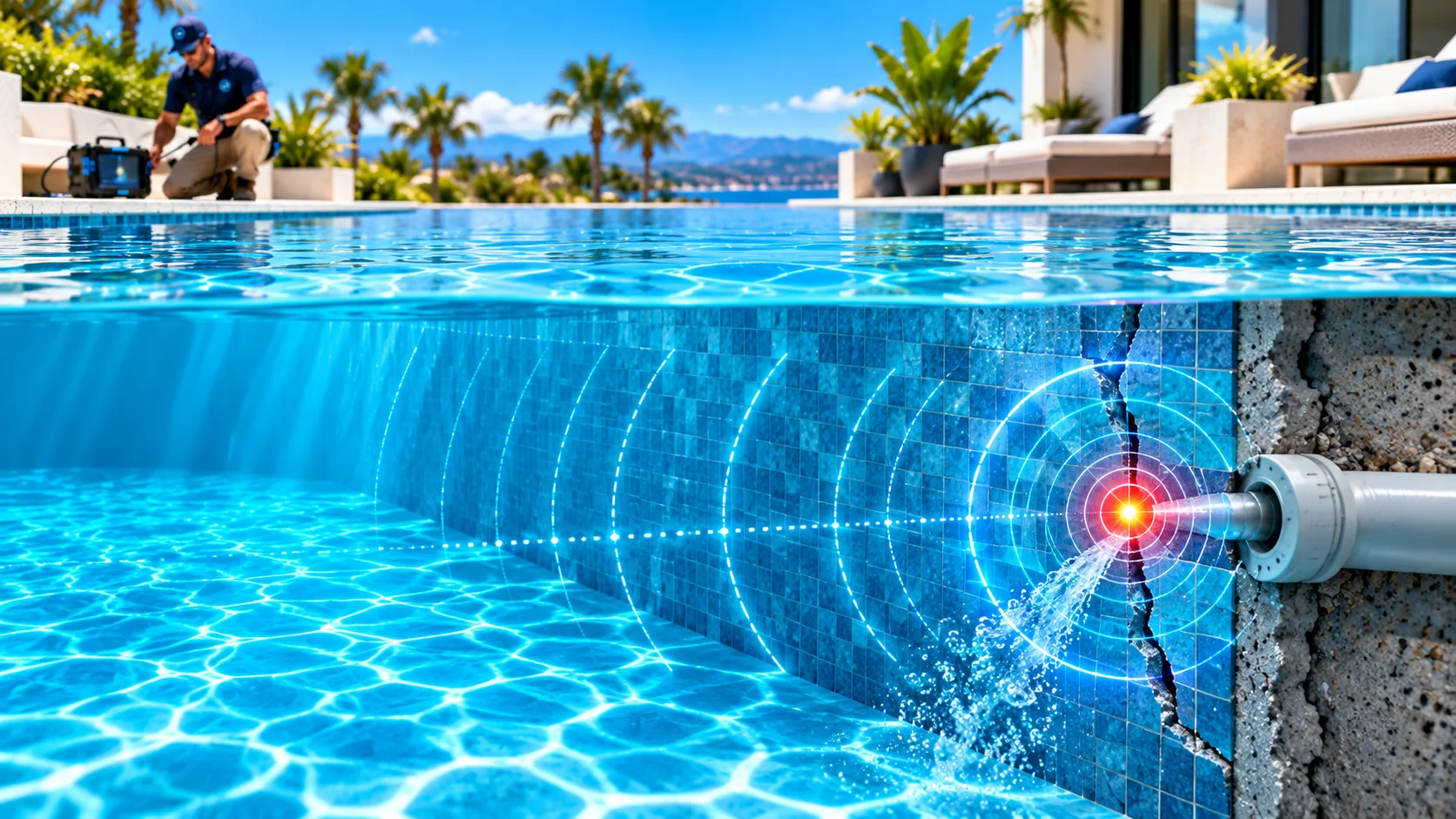
One of the more useful signs of a pool leak is water dropping faster than evaporation can explain over repeated, comparable conditions. A pool naturally loses water through evaporation and use. Rather than relying on a universal daily threshold, mark the level and perform a controlled bucket test. Rain, heavy wind or active autofill can invalidate a comparison.
Air bubbles, wet ground and equipment behavior
Unexpected air in return lines or the pump basket may point to an issue with suction plumbing, seals or the water level. A wet patch beside the pool may come from irrigation, rainwater or underground pipes. A pump running dry or unusual equipment noise calls for caution. These observations are important, but none identifies a leak location by itself.
Higher water bills and automatic refill
Where an autofill is installed, a leaking pool can maintain an apparently normal surface level while consuming more water. Review water-meter changes and ask whether unrelated household or irrigation use also increased. Combined with other signs of a pool leak, a rising water bill can help prioritize an inspection. Avoid tampering with plumbing or electricity to investigate.
When the pattern suggests professional help
If the same problem repeats, document the date, water-level change, weather and whether the pump ran. Photographs of damp spots and visible cracks can give technicians useful context. An inspection may include dye or pressure tests according to the location. Read our method comparison to understand what a technician might propose, then use the company directory to contact an appropriate provider.
Things symptoms cannot prove
Not every crack is active and not every splash of water is a leak. A sudden decline in level may also come from backwashing or accidental drainage. Good diagnosis uses more than a list of signs of a pool leak: it combines observations, measurements and targeted testing. Keep the pool closed if there is obvious structural damage or an electrical safety concern and contact a qualified professional.
Patterns are often more useful than isolated warning signs
Common pool leak signs are clues, not a diagnosis. A single damp patch can come from irrigation, rain or splashing, just as a high utility bill can reflect household demand rather than a pool leak. The useful question is whether the same observation repeats with the pool equipment, weather and water level in comparable conditions. Write down when the symptom appears; technicians can use that history to decide which system to test first.
| Observed pattern | Possible area to discuss | What it does not prove |
|---|---|---|
| Air bubbles while pump operates | Suction-side fittings, pump lid, valves | That an underground pipe has failed |
| Wet deck edge in dry weather | Nearby plumbing, irrigation, drainage | That a visible crack is the leak |
| Water stops dropping at a fitting | Light niche, skimmer, penetrating fitting | That there is only one leak |
| Auto-fill running frequently | Measure refill volume and bucket comparison | That the entire home water bill is from the pool |
Capture evidence without unsafe DIY testing
Take photos from safe locations, mark water levels and note recent pool repairs. Do not open pressurized plumbing or underwater electrical fittings. If the pump is drawing air or losing prime, shut it down according to its operating instructions and ask a qualified technician. Our diagnostic method guide helps you understand what a specialist may recommend, while the bucket test helps establish whether measurable excess loss is present.
Signs of a pool leak are strongest when several clues agree
Frequent top-ups are easy to notice, but there are other signs of a pool leak that may be more specific. For example, unexplained wet soil near the equipment, new air in suction lines or a drop in water level that changes with pump operation should be documented. Each symptom also has alternative causes, which is why a professional should not diagnose a buried pipe from a single observation.
What to record before contacting a company
Write down the date, weather, pool use, waterline measurements and whether the automatic refill was running. Take safe photographs of visible fittings or wet spots. Once you have a repeatable pattern, use the bucket test to compare the pool with evaporation. The strongest signs of a pool leak combine measurements with a clear equipment and weather history.
When leak signs require prompt professional attention
Unusual structural movement, rapidly falling water levels or water near electrical equipment deserve greater caution than a minor isolated waterline change. Avoid opening pressurized systems or touching wet electrical connections. When the signs of a pool leak are persistent, a qualified technician can plan pressure, dye or visual checks based on the observed pattern. Review the testing methods and regional company listings to prepare for that discussion.
A symptom can point to a system without proving a leak location
Water on the equipment pad may indicate a valve, seal or connection, but it can also result from splashing, rain or maintenance activity. Air at return jets can be associated with suction-side air entry or hydraulic issues; it does not by itself establish a water leak in the return pipe. Green patches or wet ground may involve pool water, irrigation or drainage. Treat each observation as a clue that guides testing, not as the diagnosis itself.
Waterline behavior can narrow the possibilities
A pool that repeatedly falls to a similar level can raise suspicion about penetrations or fittings near that elevation, but weather and operating settings may produce a misleading pattern. A connected spa whose water level changes when valves switch deserves a separate review of the transfer and check-valve arrangements. If pool water drops rapidly, prevent equipment from running dry and have any electrical hazards evaluated by an appropriate professional. Never drain an inground pool merely to hunt for a leak; groundwater and structural conditions can make draining hazardous.
| What you notice | Useful documentation | Ask the technician |
|---|---|---|
| Excess pool-level loss | 24-hour pool-versus-bucket measurements | Which shell and plumbing sections will be tested? |
| Air bubbles or lost prime | Videos, pump-on times, filter pressure observations | Will suction fittings and equipment seals be reviewed? |
| Wet ground | Location, weather, irrigation schedule and photographs | How will the pool system be separated from drainage causes? |
| Constant automatic refill | Refill frequency and water-meter history | Can the suspected loss be quantified safely? |
| Loose tiles or a crack | Close photos with a size reference | Is it cosmetic, structural or an actual leak path? |
How symptoms change across pool construction types
Vinyl-lined pools can lose water around seams, punctures and wall penetrations. Concrete or gunite pools may present concerns around joints, skimmers, light niches and structural cracks, while fiberglass pools require attention to fittings and penetrations as well as the shell. These are categories of possible defects, not probabilities for your particular pool. A competent specialist selects tests based on construction, age, previous repairs and accessible evidence.
When a symptom requires more than a DIY check
Electrical equipment close to water, visible structural movement or a dangerously falling water level should not be handled as routine troubleshooting. Keep people away from suspected electrical hazards and avoid opening pressure equipment. An unexplained loss that repeatedly exceeds a stable bucket measurement also merits professional assessment, especially if the surrounding ground or deck is changing. Use the inspection checklist to prepare a consistent, factual call.
Frequently asked questions
Can a pool leak without a visible crack?
Yes. Plumbing, fittings and seals may leak out of view. A professional may need to test concealed lines.
Do bubbles always mean a leak?
No. Air can enter a pool system for several reasons; equipment inspection is needed to identify the cause.
Should I turn off an automatic refill for testing?
Only where safe and consistent with the equipment instructions. Autofill can mask water loss during a controlled test.
Editorial references: US EPA pool water efficiency / bucket test, City of Tampa: how to check for pool leaks, HomeGuide: leak detection cost research, Angi: 2026 pool leak detection cost. Reference guidance and price figures may change; verify current information.