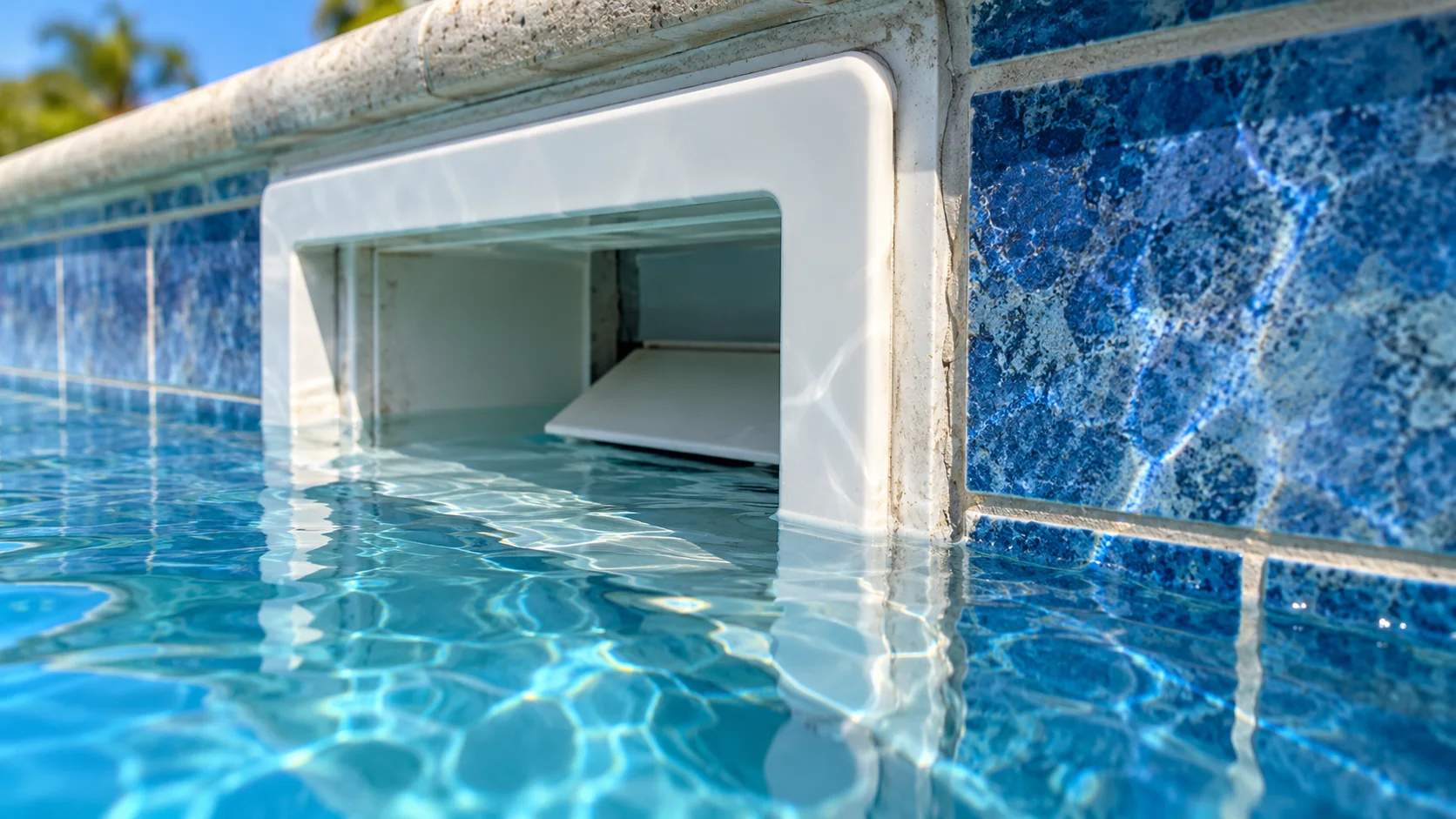
A pool skimmer leak can occur where the skimmer connects to the pool wall, within its housing or in the plumbing connected to the unit. The skimmer normally draws surface water toward the filtration system, and its installation creates several joints that must remain watertight. Aging materials, movement around the pool and previous repairs can contribute to problems at these connections.
One familiar clue is a pool that loses water until the level approaches the skimmer opening. Yet this pattern does not establish that the skimmer itself is defective. A nearby crack, plumbing connection or separate opening at a similar elevation can behave in much the same way.
Plan a detection budget, then compare relevant specialists before authorizing repairs.
Where Does a Pool Skimmer Usually Leak?
The skimmer throat and pool wall
The skimmer throat is the passage where pool water enters the skimmer. In a concrete pool, the junction between the skimmer and the surrounding structure can develop a separation or crack. A leak at this location may allow water to move behind the pool wall rather than visibly dripping into an accessible area.
The skimmer housing
A crack can form within the skimmer body or around a fitting. Its significance depends on its position relative to the operating water level and the internal plumbing. A visible line in the plastic is not always a through-crack, so the condition should be tested before replacement is recommended.
The suction pipe connected to the skimmer
A damaged pipe, elbow or threaded connection below the skimmer may cause water loss even when the exposed housing appears intact. Air bubbles or difficulty maintaining pump prime may accompany some suction-side problems. These symptoms can also have other explanations, including restrictions or equipment sealing issues.
Signs That Deserve a Closer Look
Look for repeated water loss near the skimmer level, cracks at the surrounding finish and abnormal wetness near the pool edge. Note whether the pump draws air, whether the skimmer opening is visibly separated from the wall and whether previous patching has failed. Photograph suspected damage before it is concealed by another repair.
A single observation should not become the basis for replacing the entire skimmer assembly. First confirm that the pool is losing more water than evaporation. The PoolLeakRadar bucket test provides a controlled way to estimate that difference.
How Is a Skimmer Leak Confirmed?
A technician may inspect the throat, face, body and accessible plumbing before selecting additional tests. Dye testing can show localized water movement toward a specific opening when conditions are suitable. If an underground suction pipe is suspected, line isolation and pressure testing may be needed.
The appropriate method depends on whether the skimmer is part of a concrete, fiberglass or vinyl-lined installation. Some repairs target a small structural junction, while others require replacing a component or accessing buried plumbing. A professional should explain which failure has been confirmed and why the proposed repair addresses it.
Repairing a Skimmer Leak: What Affects the Price?
Repair costs vary greatly between an accessible, localized seal problem and a skimmer replacement involving deck removal. The condition of the housing, surrounding finish, pipe connections and decking can all affect labor. In a vinyl-lined pool, the faceplate and gasket arrangement also need attention.
Before accepting a quote, ask whether the estimate covers detection, repair materials, access work and restoration. Confirm how the repaired area will be tested afterward. A warranty should specify which component and type of failure it covers rather than simply promising that the pool will never leak again.
When Is Professional Help the Better Choice?
A superficial gap can appear easy to seal, but applying material over an unidentified opening may hide the problem without correcting it. Repeated repairs around the same skimmer, active water loss or suspected underground damage are stronger reasons to request professional testing. Avoid disturbing suction outlets or plumbing assemblies without the necessary training.
A well-documented skimmer inspection can distinguish a relatively localized repair from work that requires removing part of the deck.
Find the cause before paying for replacement.
Estimate Pool Leak Detection Cost – Review inspection and repair-scope considerations.
Find a Pool Leak Specialist – Locate providers advertising pool leak detection and related services.
Frequently Asked Questions
Can a skimmer leak when the pump is off?
Yes. Water can escape through a submerged skimmer junction or housing defect without circulation. A connected suction line may also behave differently when the pump stops.
Does water stopping at the skimmer level prove a skimmer leak?
No. It is a useful clue, but nearby shell defects and other openings at similar elevations can produce the same pattern.
Can a pool skimmer leak be repaired without replacing the unit?
Sometimes. A localized joint defect may be repairable, while a severely damaged housing or connection may require replacement.
Will a skimmer leak increase the water bill?
It can, especially when automatic filling hides repeated water loss. The actual bill impact depends on the amount of water replaced and local utility rates.