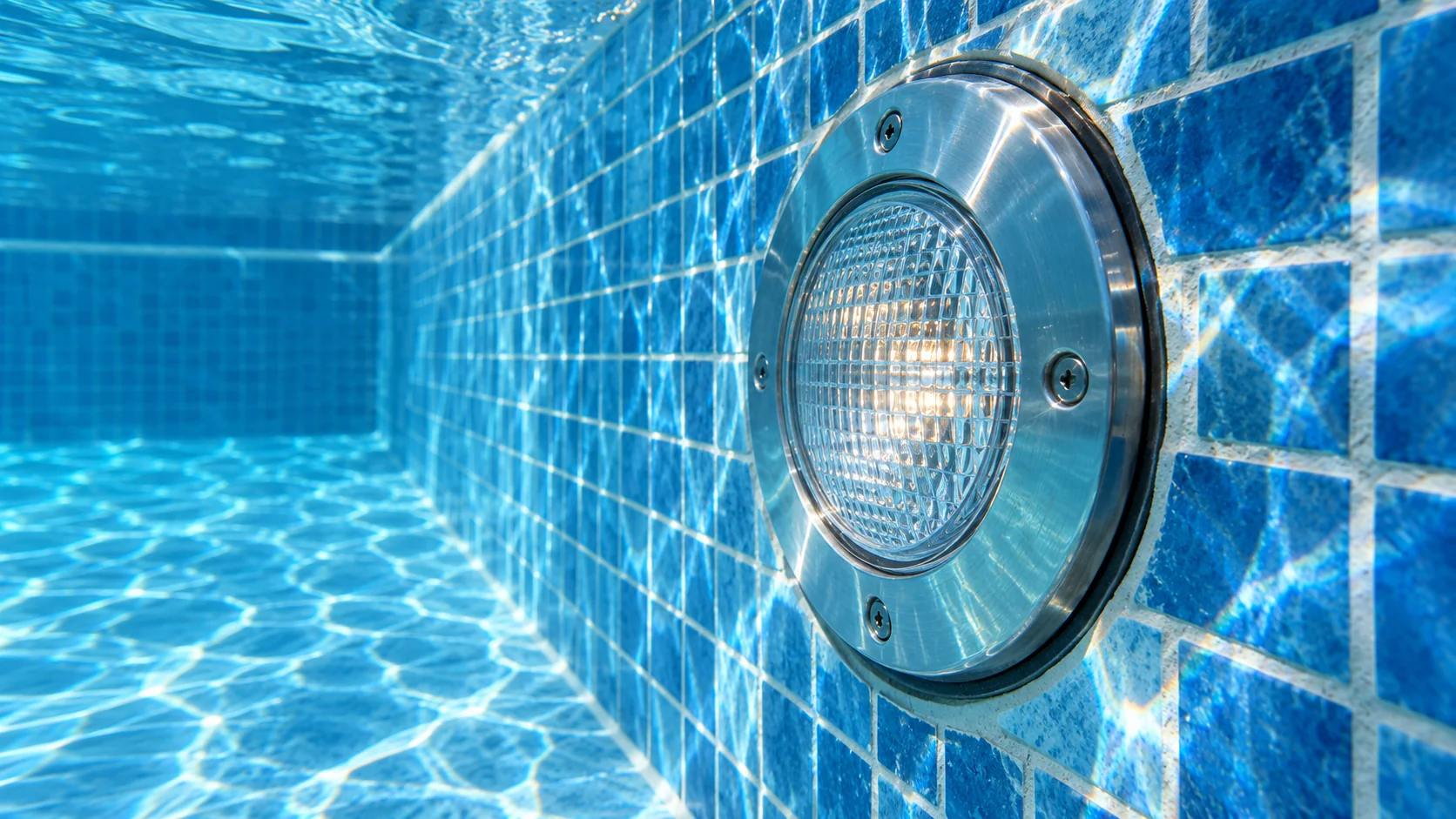
A pool light leak can develop around the niche that holds an underwater fixture, at the conduit penetration or where the assembly meets the pool structure. These openings create potential water paths through the otherwise sealed pool wall. Over time, movement, aging materials or damage may compromise the watertight connection.
However, water inside a light fixture and water escaping from the pool are two different problems. A flooded light housing can indicate an electrical equipment failure without proving that water is leaving the pool through the niche. Because electricity is involved, suspected light-related defects require particular caution.
Plan a detection budget, then compare relevant specialists before authorizing repairs.
Where Can Water Escape Around a Pool Light?
The light niche and pool shell
Many traditional underwater lights are installed in niches built into the pool wall. The joint between the niche and the surrounding concrete, fiberglass or other shell material must remain watertight. A gap around this junction may allow pool water to move behind the finish.
The electrical conduit penetration
A light cable commonly passes through a conduit connected to the back of the niche. If the conduit connection or its sealing arrangement is defective, water may follow an unintended route. Proper inspection requires understanding the fixture and conduit design, not merely observing the front of the light.
A nearby structural crack
Water movement near a light does not guarantee the niche is the source. A crack in the surrounding shell or a separate fitting defect can produce similar observations. An accurate diagnosis may require examining both the light penetration and nearby structural surfaces.
Warning Signs That Need Attention
Possible water-loss clues include a persistent drop in pool level, visible separation around the niche or an inspection result that points toward a nearby opening. A pool that repeatedly settles near the height of the light may warrant an investigation of that area. These observations remain clues rather than proof of a pool light leak.
Electrical warning signs are different and more urgent. Flickering lights, unexplained breaker or GFCI trips, visible fixture damage or signs of electrical shock require keeping swimmers out of the pool and arranging qualified electrical evaluation. Do not handle or remove an underwater light to test for a leak.
Why DIY Testing Around Pool Lights Is Risky
Even when an underwater fixture appears to be operating normally, its electrical condition may not be known. Moving the assembly, disturbing cables or attempting a repair with inappropriate materials can create a serious hazard. Switching a wall control off is not a substitute for qualified electrical isolation and verification.
A pool leak specialist may coordinate with a qualified pool electrician when the diagnostic process involves the lighting assembly. Any required underwater inspection should be performed using appropriate professional procedures. No household dye test is worth exposing someone to an electrical risk.
How Professionals Investigate a Light Niche Leak
The inspection begins with the reported water-loss pattern and the condition of the surrounding structure. Once electrical hazards have been addressed, a specialist may examine the niche joint and use a targeted diagnostic method suitable for that location. Additional testing may be necessary to separate a conduit-related problem from a shell defect.
A confirmed repair might involve the niche connection, a conduit sealing system or damaged structural material. Work on the electrical fixture itself may be separate from repairing the pool's watertight structure. The final quote should identify exactly which issue is being corrected.
What Determines Pool Light Leak Repair Costs?
Cost depends on the type of fixture, access to the niche, electrical work required and whether the pool structure needs repair. A localized watertight joint problem is a different project from replacing electrical equipment or rebuilding a damaged section of the wall. Some repairs may also require controlled changes to the water level.
Ask for a written separation of diagnosis, electrical inspection, leak repair and any restoration work. Confirm which contractor is responsible for each component and how the result will be verified. An estimate should never treat a suspected niche leak as confirmed before appropriate testing.
Suspect a problem around an underwater light? Keep the pool out of use if electrical safety is uncertain, then arrange a qualified assessment.
Estimate Pool Leak Detection Cost – Understand diagnostic cost considerations.
Find a Pool Leak Specialist – Compare listed providers and discuss the need for qualified electrical work.
Frequently Asked Questions
Can water inside the pool light make the pool lose water?
Not necessarily. Water entering a fixture housing is different from water escaping through a niche, conduit or pool-wall connection.
Is it safe to swim if a pool light is leaking?
Do not use the pool when an electrical defect is suspected. Arrange evaluation by a qualified professional before restoring normal use.
Can a light niche leak be repaired without replacing the light?
Sometimes. The repair depends on whether the confirmed failure concerns the niche, conduit, shell or electrical fixture.
Will a pool leak detection company also repair the light?
Services vary. Ask whether the provider handles the structural leak, coordinates with a qualified electrician or refers electrical repairs separately.