Why one test does not work for every leak
Professional pool leak detection methods depend on whether the suspected problem is in the pool shell, a wall fitting, the equipment pad or an underground line. A technician starts by gathering clues and eliminating simple explanations before choosing a targeted test. This limits unnecessary disruption and makes the repair estimate more meaningful.
Dye testing near fittings and shell defects
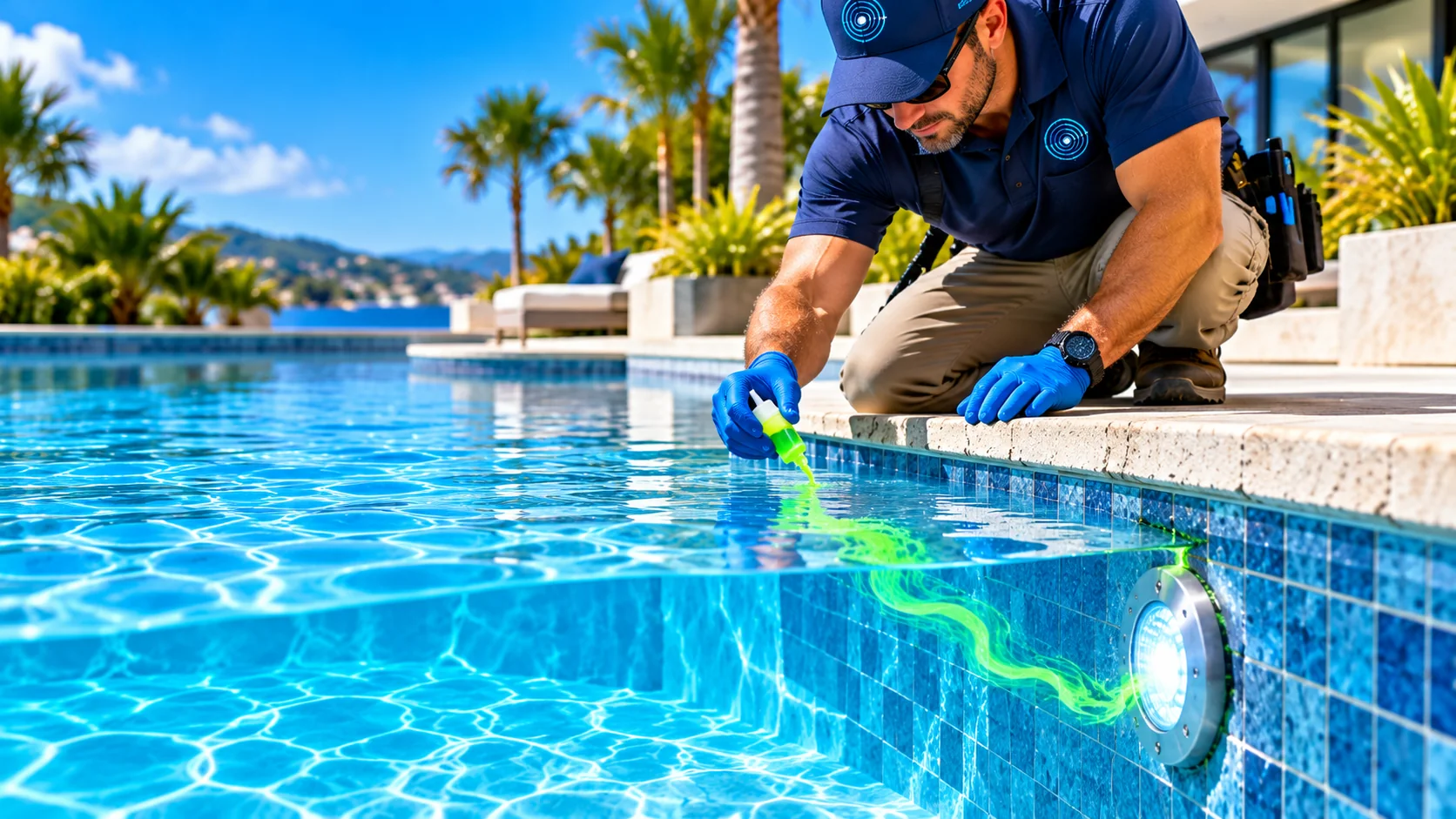
Dye testing can help investigate specific cracks, skimmers, return fittings and light niches. The operator observes how a small amount of dye moves near a suspected opening under suitable conditions. Water movement can make the test hard to interpret, so dye is not a universal screening method. It also cannot fully evaluate buried plumbing systems.
Pressure testing isolated pool lines
Pressure testing helps determine whether a section of plumbing is holding pressure as expected. A technician may isolate suction or return lines and use suitable equipment to test them. This is specialized work: pressurized systems are hazardous if mishandled, and homeowners should not attempt to improvise pressure testing on pool equipment. Where a line fails, additional location methods may be required.
Acoustic and electronic location methods
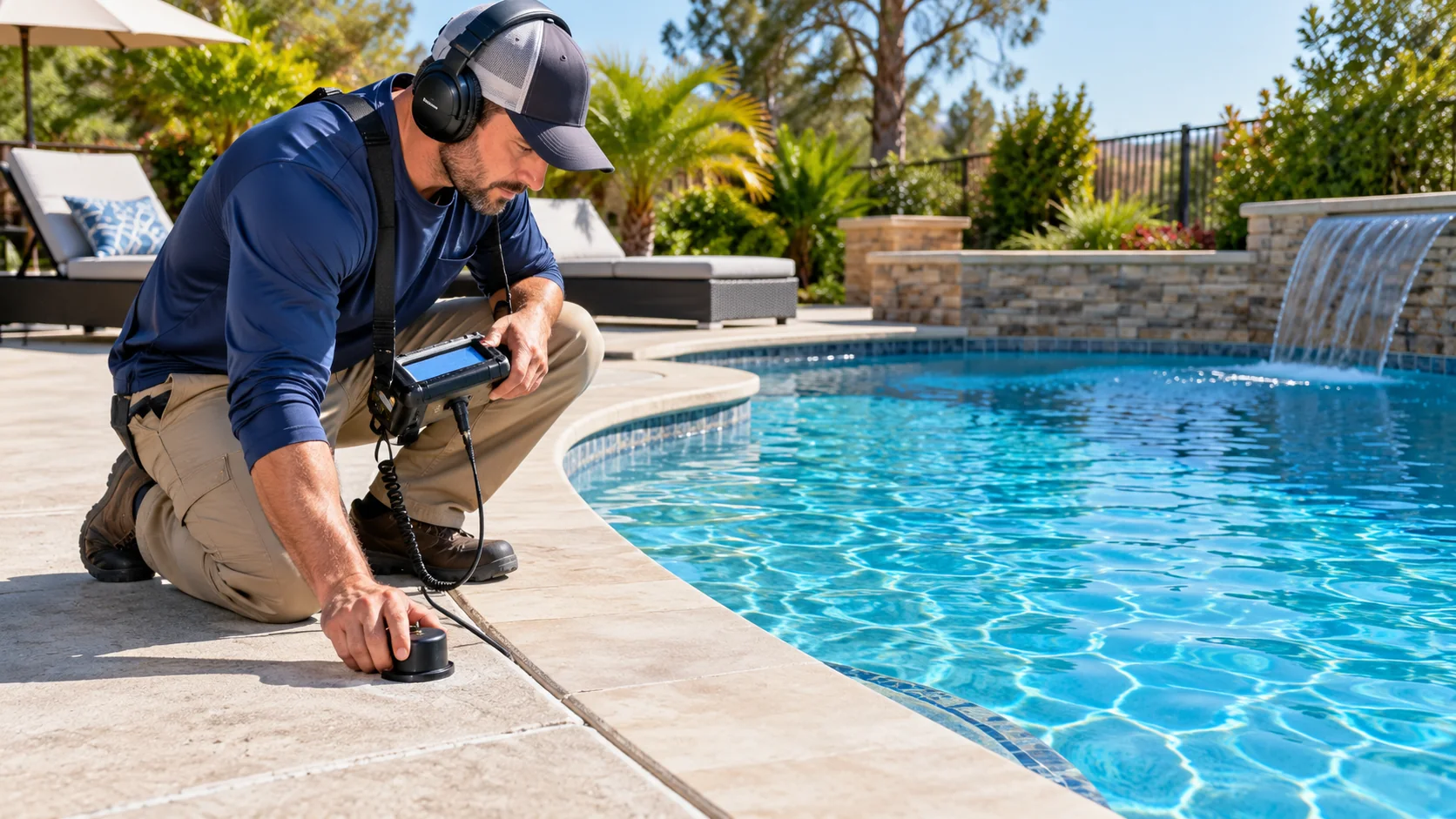
Acoustic sensors or electronic listening equipment may help localize some leaks after a plumbing problem has been identified. Not all materials or environments produce equally clear signals. Other observations, such as changes when pumps operate, can help narrow the inspection. A good professional explains which pool leak detection methods are suitable for the suspected location and why.
Understanding the technician's report
Ask whether you will receive written findings, pictures, the test scope and any excluded areas. Also ask whether structural repairs, pipe excavation or follow-up tests are billed separately. Compare typical costs in our inspection price guide and keep a list of questions from the hiring guide. The right pool leak detection methods should help support a clear diagnosis, not just an impressive equipment demonstration.
How methods complement one another
Professional diagnosis generally follows a sequence rather than using every tool indiscriminately. A technician first documents the symptom and inspects visible equipment, fittings and the shell. Where a line is suspected, isolating and pressure-testing it may establish whether it can hold pressure; acoustic location or further inspection may then be appropriate. Dye checks at a submerged defect answer a different question: whether water is moving into a particular opening under those conditions.
| Method | What it can help establish | Limitations to discuss |
|---|---|---|
| Dye tracing | Local movement of water at a suspected shell defect or fitting | Does not independently assess every buried pipe |
| Isolated pipe pressure test | Whether a selected line holds test pressure | Does not necessarily locate the exact break |
| Electronic listening | Potential location of escaping pressurized water | Environmental noise and access affect results |
| Underwater camera inspection | Visible documentation of reachable underwater areas | Does not replace concealed plumbing tests |
What to request after the inspection
Ask the specialist to name the tested circuit or fitting, explain positive and negative results and describe the next test if the first approach is inconclusive. A clear report should distinguish a confirmed leak from a suspected source and an unrelated defect. Obtain the proposed repair scope and any access or restoration charges separately. Use the US starter directory to find providers who publicly describe relevant methods, and the hiring checklist to standardize your questions.
Pool leak detection methods are selected by the suspected system
Professional pool leak detection methods are not interchangeable. A targeted dye test can help investigate accessible fittings and cracks, while an isolated plumbing pressure test can indicate whether a line holds pressure. Electronic listening or acoustic equipment may then help narrow the possible location of an underground leak. The sequence and suitability are determined by the trained technician and actual site conditions.
| Method | Typical question | Important limit |
|---|---|---|
| Dye testing | Is water moving toward a suspected opening? | Does not test every hidden pipe |
| Pressure isolation | Does a tested plumbing circuit hold pressure? | Needs safe professional handling |
| Acoustic listening | Can a suspected plumbing leak be narrowed down? | Results depend on equipment and conditions |
| Underwater inspection | Is there visible damage in submerged surfaces or fittings? | May still require further confirmation |
Ask how findings are documented
Understanding pool leak detection methods helps homeowners ask useful questions, but it does not make invasive testing suitable for DIY work. Ask which circuits are being isolated, whether a written report is supplied and how uncertain results will be handled. If a contractor recommends deck cutting or plumbing excavation, ask for the evidence supporting that step and the restoration scope. See the hiring checklist for questions to take to a service visit.
How a specialist chooses a test sequence
The best test is the one that can answer a specific question about the suspected system. A dye test can help observe local water movement near a crack or fitting, but it cannot certify the condition of all underground plumbing. A pressure test can show whether an isolated circuit holds the test pressure under defined conditions, but that alone may not give an excavation point. Acoustic tools may help narrow the position of an actively escaping flow, while very small or intermittent leaks can remain difficult to localize.
| Technique | What it evaluates | Important limitation |
|---|---|---|
| Visual/underwater examination | Accessible shell, liner, fittings and penetrations | Hidden pipe defects may remain unseen |
| Dye tracing | Possible suction path near a suspected defect | Currents and circulation can disturb the result |
| Isolated pressure test | Integrity of a specific pool plumbing circuit | Does not always pinpoint where the pipe fails |
| Acoustic/hydrophone listening | Leak-related sound in water or buried lines | Dependent on conditions, noise and active flow |
| Specialized camera inspection | Visible pipe interior or selected accessible structures | Not suitable for every line and obstruction |
| Post-repair retest | Whether the tested failure has been corrected | Other leaks can still exist elsewhere |
How to interpret a failed plumbing pressure test
A failed test suggests the isolated line or its fittings may not be holding pressure under the procedure used. A specialist should rule out test-fixture problems and describe which circuit was isolated before recommending demolition. Additional listening, camera work or staged isolation may be necessary to locate a likely repair point. Pressure work can be dangerous when performed without suitable equipment and training, so homeowners should not disconnect or pressurize pool plumbing themselves.
Why an apparently negative test may not close the case
Some leaks occur only when valves switch, certain pump cycles run or water reaches a particular level. A negative result on one plumbing circuit does not automatically clear another circuit or the shell. The report should identify the conditions of each test, including what could not be reached and whether follow-up is recommended. Ask for evidence-based next steps instead of accepting an unsupported statement that no leak is possible.
Questions to ask about the written inspection report
Request the suspected or confirmed defect location, tested circuits, diagnostic methods, photographs and any uncertainty that remains. If the repair will require excavation, ask how the location was narrowed and who is responsible for replacing decking, coping or landscaping afterward. When the pool has multiple defects, insist that each finding is described separately. The goal is to purchase useful diagnostic evidence, not simply a service visit with a verbal conclusion.
Frequently asked questions
Is acoustic testing always necessary?
No. Visible fitting problems or dye testing may be sufficient in some cases; buried lines can need more targeted tools.
Does a pressure test find the exact spot?
Not necessarily. It can identify a suspect line; locating the exact failure can require further work.
Can I perform these tests myself?
A basic bucket comparison is accessible to homeowners. Do not improvise pressure testing or open electrical and pressurized pool equipment.
Editorial references: US EPA pool water efficiency / bucket test, City of Tampa: how to check for pool leaks, HomeGuide: leak detection cost research, Angi: 2026 pool leak detection cost. Reference guidance and price figures may change; verify current information.