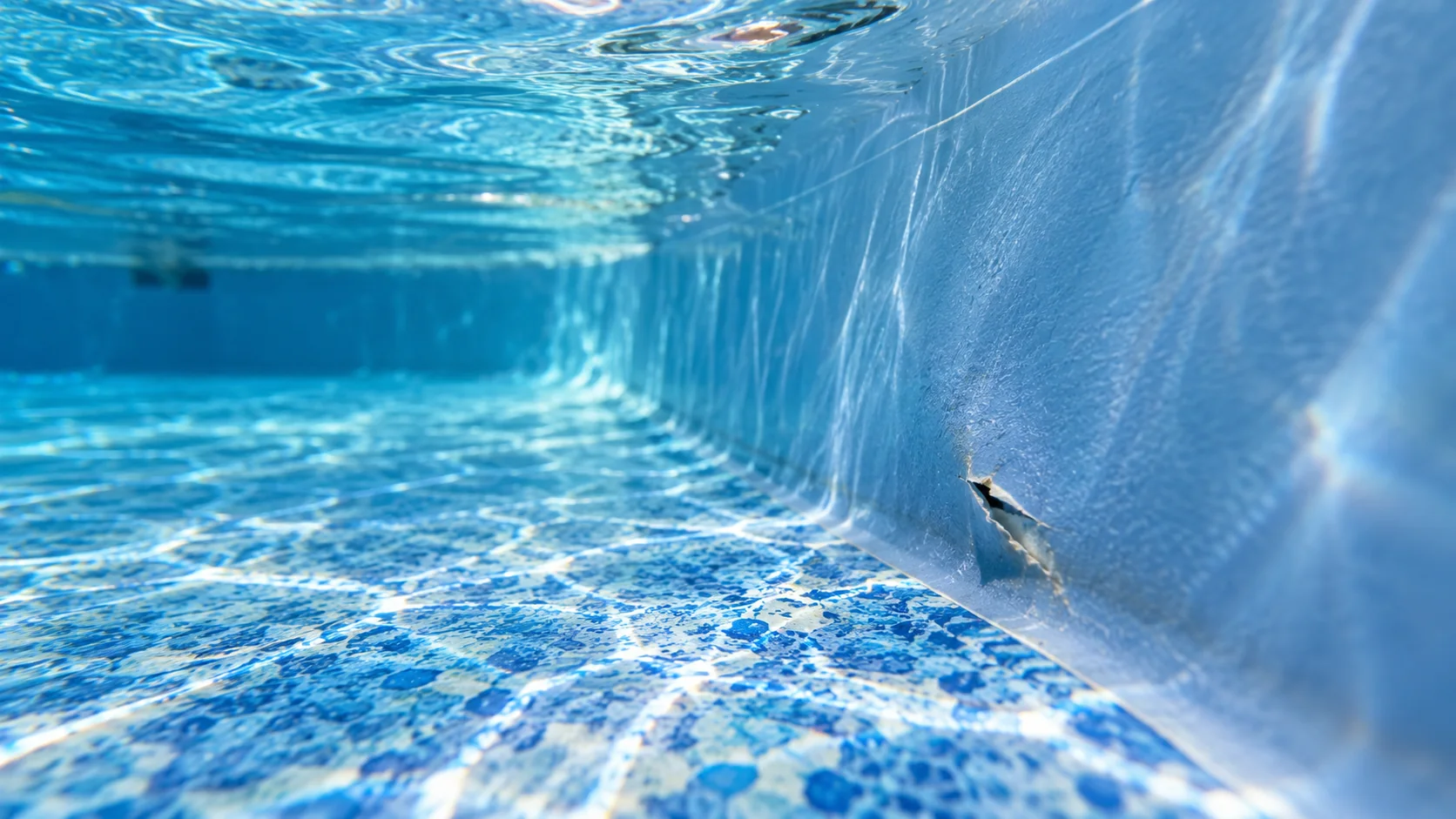
A vinyl pool liner leak may come from a puncture, tear, failing seam or problem around a fitting that passes through the liner. Vinyl liners create a flexible watertight surface, but sharp objects, wear, aging and improper installation can compromise that barrier. Even a small opening can allow water to escape into the area behind the liner.
Finding the damaged location matters because not every suspected liner leak is actually in the liner material. Water may also escape around skimmer faceplates, return fittings, steps or other penetrations. A replacement liner will not solve an unrelated plumbing defect.
Plan a detection budget, then compare relevant specialists before authorizing repairs.
Signs of a Possible Vinyl Pool Liner Leak
Repeated water loss is often the first indication. A visible puncture, tear or damaged seam may make the source easier to suspect, but the water-loss pattern should still be confirmed. Some damage can be difficult to see, especially near folds, steps or the pool floor.
A soft or abnormal area behind the liner can also justify further assessment. Water entering the space behind a liner can affect how it sits against the supporting wall or floor. However, wrinkles and irregularities are not proof of an active leak because they can result from installation or other conditions.
The PoolLeakRadar bucket test calculator can help estimate whether the observed water drop exceeds evaporation.
Where Should the Inspection Focus?
Liner walls and floor
The liner surface can be inspected for visible tears, punctures and unusual wear. Areas around steps, transitions and previous repair patches may deserve additional attention. An apparently intact surface does not eliminate the possibility of a small defect.
Seams and welded joints
Manufactured liner sections are joined along seams designed to remain watertight. Damage or separation at a seam may be harder to repair reliably than a simple puncture in otherwise sound material. The condition and location of the seam influence the repair recommendation.
Skimmers, returns and other fittings
Faceplates and gaskets are installed at several penetrations through the liner. A damaged seal, loose connection or problem behind the fitting can allow water to escape. Replacing or patching the liner without addressing the fitting may leave the real failure unchanged.
When Can a Vinyl Liner Be Patched?
A localized puncture in material that remains flexible and structurally sound may be suitable for patching. The repair method must be compatible with the liner and the specific damage. Proper preparation and a good bond are necessary for a durable result.
A patch may be less appropriate when the material has become brittle, severely stretched or extensively damaged. Multiple recurring failures or significant seam damage can make replacement a more reasonable option. The condition of the entire liner matters more than the size of one visible hole.
When Is Replacement the Better Decision?
Replacement becomes more relevant when the liner cannot maintain its shape, no longer seats properly or has widespread deterioration. Extensive cracking, repeated patch failures and deteriorated seams can also change the economics of repair. A professional assessment should establish whether the liner itself is the limiting factor.
A new liner is a larger project than a localized patch. It may require checking the underlying pool surface, fittings and installation conditions before replacement. Any existing groundwater or drainage concerns should be considered because improper water removal can create additional damage.
Why Draining the Pool Is Not a Simple DIY Test
The pressure of pool water helps keep many liners correctly positioned against the supporting structure. Unplanned draining can cause displacement, stretching or problems with the pool floor and wall system. Groundwater conditions may further complicate the situation.
Do not empty a vinyl-lined pool just to search for a suspected hole. A trained professional can determine whether underwater inspection, controlled dye testing or another method is appropriate. The goal is to locate the actual water path without creating a second repair problem.
Comparing Patch, Repair and Replacement Quotes
A patching quote should identify the confirmed damaged area and the intended repair method. A replacement quote should explain what is included for the liner, installation, fittings, preparation and removal of old materials. Ask how the contractor will determine whether underlying plumbing or fitting defects remain.
The detection fee may be separate from any liner work. Clarify the scope before agreeing to a repair, especially if the suspected leak location has not been confirmed. A lower initial quote may exclude important preparation or verification steps.
Choosing the Next Step
For a small, confirmed puncture in healthy liner material, a localized repair may be enough. For widespread deterioration or repeated failures, a professional may recommend replacement after assessing the full installation. When the source is uncertain, leak detection should come before either choice.
A new liner is not always necessary, but a patch is not always sufficient.
Estimate Pool Leak Detection Cost – Review the likely diagnostic budget and factors affecting the quote.
Find a Pool Leak Specialist – Compare providers and ask about their experience with vinyl-lined pools.
Frequently Asked Questions
Can a small hole in a vinyl pool liner cause significant water loss?
Yes. The rate depends on the opening, water pressure and surrounding conditions, so even small defects deserve assessment.
Is it possible to patch a vinyl liner underwater?
Some liner repair systems are designed for underwater use. Suitability depends on the material, damage and manufacturer's instructions.
Does a leaking vinyl pool always need a new liner?
No. Localized damage may be repairable when the surrounding material remains in good condition.
Can a pool leak specialist determine whether the liner is the problem?
An appropriately equipped specialist may use inspection and targeted testing to investigate liner defects, fittings and other possible water paths.