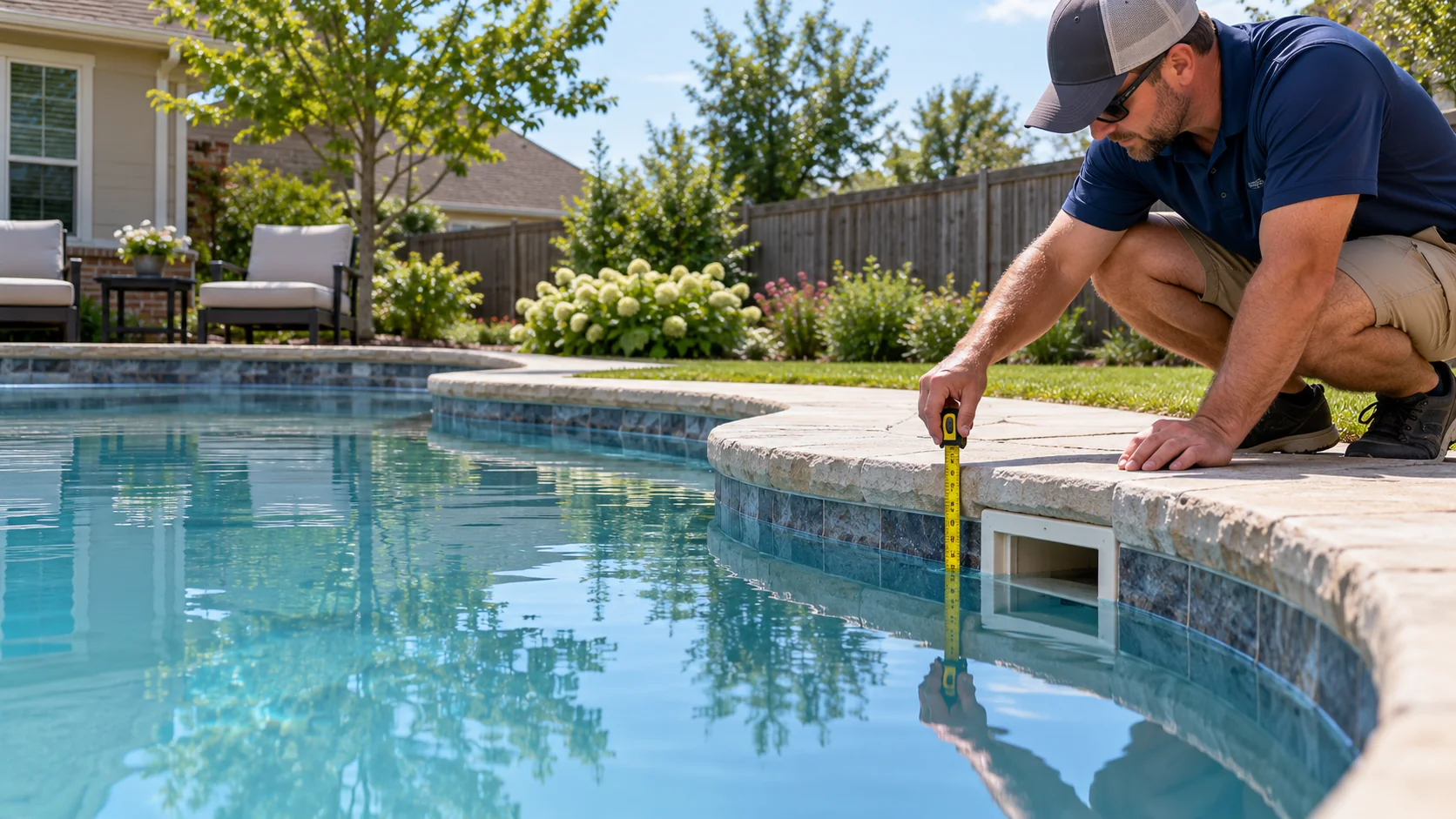
A pool losing water when the pump is off may have a leak in the pool shell, a skimmer connection, a fitting or a plumbing section affected by changes in pressure. When circulation stops, water remains in the pool and still exerts pressure on submerged openings. A defect can continue releasing water even when no equipment is operating.
In some installations, a suction-side plumbing problem may become more noticeable after the pump stops because that section is no longer under suction. However, pump-off water loss alone cannot distinguish a damaged suction pipe from a crack in the pool structure. Measurements and a targeted inspection are needed before choosing a repair.
Plan a detection budget, then compare relevant specialists before authorizing repairs.
What Changes When Pool Circulation Stops?
While the pump runs, suction plumbing draws water toward the equipment and return plumbing pushes it back toward the pool. Once circulation stops, both systems move toward static conditions, although the exact behavior depends on valves, elevations and the equipment configuration. Water in submerged plumbing can still escape through an opening.
A pool shell crack, damaged liner or leaking fitting may allow water loss regardless of the pump schedule. A skimmer throat or light niche can also remain exposed to water pressure while the equipment is off. These possibilities explain why turning off the pump does not necessarily stop a leak.
Which Problems Should Be Considered?
Suction-side plumbing: A defect in a skimmer line or another suction circuit may behave differently when the pump stops. Air entering the system during operation can be another clue, although air bubbles have several possible causes.
Pool shell or liner: Cracks, punctures and deteriorated seals can release water without circulation. The rate may vary with the water level and the size or location of the opening.
Skimmers and wall fittings: The junction between a fitting and the pool structure can develop gaps. Water loss may change as the pool level approaches the affected connection.
Attached spa plumbing: In some pool-spa combinations, water can flow backward through valves when the pump stops. The spa level may drop while water returns to the pool rather than leaving the overall system.
These sources require different repairs. Correctly separating them can prevent unnecessary pipe replacement or excavation.
Does the Water Level Stop at a Particular Height?
A pool that repeatedly settles near the same waterline provides a clue about the elevation of a possible opening. For example, an issue near a skimmer may become less active as the water falls below that connection. A fitting or wall defect at another depth can produce a different pattern.
Nevertheless, a stable waterline does not prove the leak's exact location. Some water loss stops because a plumbing circuit has drained, an autofill has changed behavior or the conditions have changed. Do not deliberately let the pool drain below safe operating limits to test a theory.
If the level approaches skimmer intakes, lights or another critical component, arrange professional guidance before continuing.
How to Document the Problem Before an Inspection
Record the starting water level, the amount of loss and the pump operating schedule. Use a bucket comparison to estimate how much of the change exceeds evaporation. Note whether an attached spa also changes level and whether the pool refills automatically.
The bucket test calculator helps organize this first measurement. When discussing the result with a technician, state which observations were made with the pump off and whether they can be repeated under similar conditions.
How a Specialist Narrows the Cause
A specialist may begin with visual checks around accessible fittings, skimmers and the equipment pad. A suspected plumbing line can be isolated and tested, while a specific structural gap may be examined using a controlled dye test. Different methods answer different questions, so a comprehensive inspection is not necessarily one single test.
A useful report should identify what was tested, which results were conclusive and where additional investigation is required. It should also distinguish the inspection fee from the cost of repairing the confirmed defect.
Plan the inspection before authorizing a repair.
Estimate Pool Leak Detection Cost – Understand the potential diagnostic scope and costs.
Find a Pool Leak Specialist – Explore local providers and compare their advertised services.
Frequently Asked Questions
Why does my pool lose more water when the pump is off?
A suction-side problem is one possibility, but shell defects, fittings and changes in water movement can also explain the pattern. It is not a reliable diagnosis without testing.
Can a pool lose water without any plumbing leak?
Yes. A damaged liner, structural crack, skimmer junction or light niche can release water even when the plumbing is intact.
Is an overnight water-level drop enough to confirm a leak?
No. Evaporation, weather, water features and automatic filling can influence the observation. A controlled comparison is more informative.
Should I drain the pool to look for the problem?
No. Unplanned draining can damage a pool or liner, particularly where groundwater conditions are unfavorable. Have a qualified professional determine whether lowering the water is necessary.