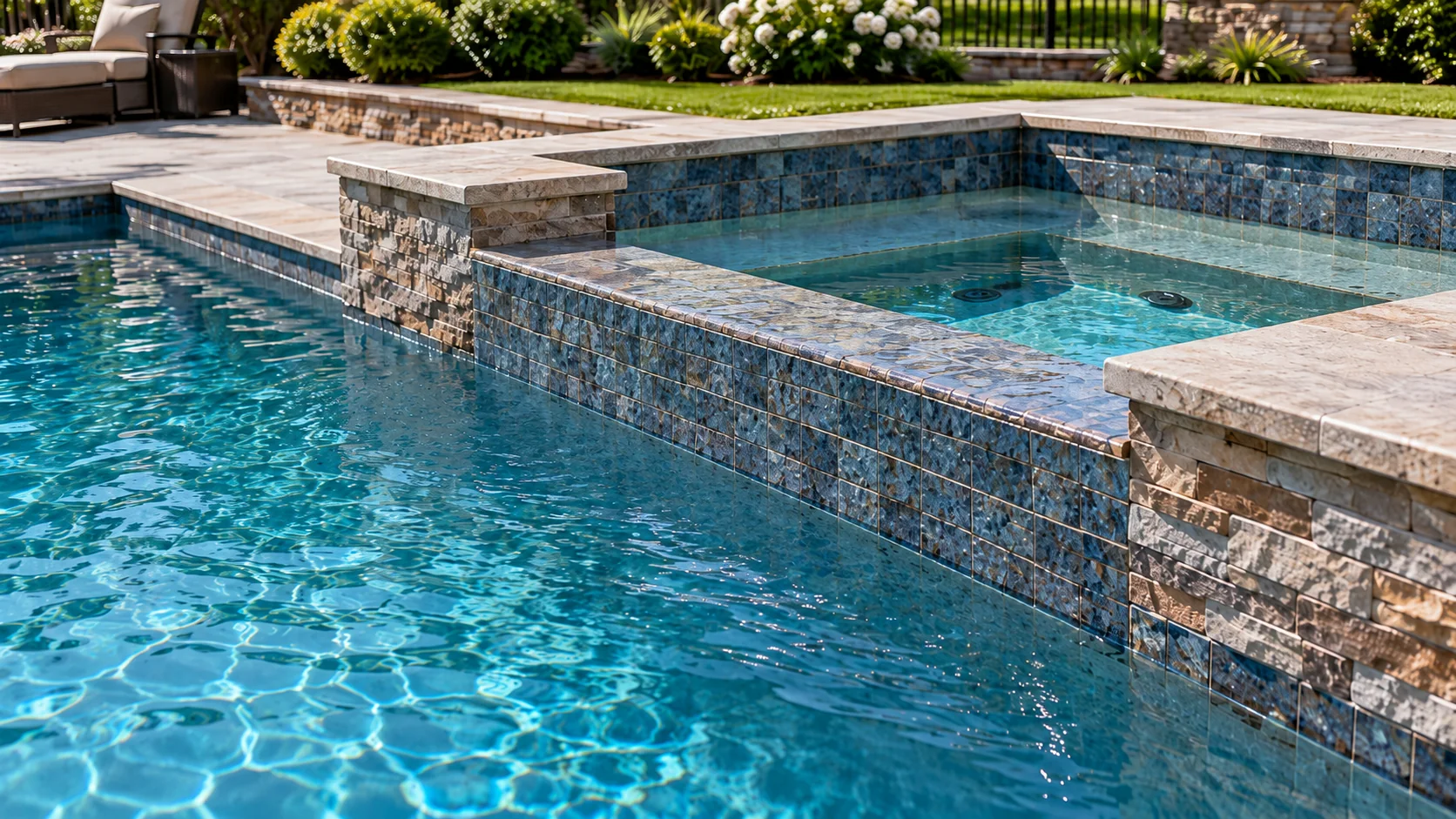
A spa losing water overnight may have a leak, but an attached spa can also drain backward into its swimming pool through the circulation plumbing. This commonly becomes noticeable after the pump shuts off and the system changes from active circulation to static conditions. The water may move from the elevated spa to the lower pool without leaving the overall pool-spa system.
This distinction can save unnecessary leak detection and structural repairs. A spa that loses several inches of water while the adjacent pool gains water has a different problem from a spa that continually loses water to the surrounding ground. The starting point is to establish where the water is actually going.
Plan a detection budget, then compare relevant specialists before authorizing repairs.
Why an Attached Spa May Drain After the Pump Stops
Many attached spas are raised above the main pool and have shared circulation equipment. While the pump runs, water can be directed through the spa and allowed to spill into the pool. When circulation stops, the higher water level can create conditions for reverse flow if the plumbing arrangement permits it.
A check valve is designed to allow flow in one direction and prevent flow in the opposite direction. If a check valve fails to seal or another valve allows an unintended flow path, water may return from the elevated spa to the lower pool. The exact behavior depends on the plumbing layout and valve configuration.
Check Valve Problem or Real Spa Leak?
| Observation | What it may suggest |
|---|---|
| Spa level falls after pump shutdown, while pool level rises | Possible backflow through shared plumbing |
| Spa and pool both show unexplained water loss | Possible actual system leak or another water-loss source |
| Spa level stops at a consistent fitting height | Investigate fittings and relevant plumbing paths |
| Water loss continues when systems are correctly isolated | Further investigation of a true leak may be needed |
| Spa drains only in certain automation modes | Inspect valve positions and control behavior |
These are diagnostic clues rather than definitive findings. Some systems have complex automation, water features or multiple valves that affect how water moves. A technician should confirm the intended hydraulic configuration before recommending parts.
How to Observe an Overnight Water-Level Change
Begin by recording the spa and pool levels when the circulation system finishes its normal operating cycle. Note the selected automation mode and the time when the pump stops. Compare both levels later under similar conditions, accounting for rainfall, splash-out and evaporation.
Photographs of the spillover and waterline can be useful. If the spa drops while the main pool rises, mention that behavior specifically when contacting a contractor. It is often more informative than simply reporting that the spa needs refilling every morning.
Do not experiment with unknown valve positions or operate pumps when their water supply may be inadequate. A lowered spa can expose fittings and affect equipment operation. If water reaches an unsafe level, stop using the affected equipment and arrange qualified assistance.
When Is an Actual Spa Leak More Likely?
A true leak becomes more concerning when water appears to leave the entire system rather than merely move into the adjacent pool. Cracks, damaged fittings, plumbing connections and light or jet penetrations are possible sources. The specific location depends on the spa design and its relationship to the shared pool equipment.
For a standalone hot tub, the diagnostic approach differs because there may be no connected swimming pool to receive backflow. Water loss could involve the shell, plumbing, fittings or equipment, and excessive evaporation may also need consideration. A specialist should identify the system type before selecting tests.
What Should a Technician Check?
A professional may inspect check valves, diverter valves, actuators and the plumbing arrangement for the pool-spa combination. If backflow is confirmed, the repair may involve valve servicing rather than leak detection inside the spa structure. When a real leak remains possible, targeted testing can investigate the shell or plumbing.
Ask whether the inspection covers both hydraulic operation and actual water loss. Request a clear explanation of the reason for recommending valve work, plumbing repair or additional testing. The written quote should identify whether replacement parts and follow-up verification are included.
Understanding the Cost Difference
A valve-related diagnosis and an underground spa plumbing leak can require very different amounts of labor. Accessibility, automation complexity, damaged parts and repair responsibilities all affect the estimate. Structural or buried-plumbing work may require a separate specialist from the technician who services the circulation controls.
The best starting point is identifying whether there is external water loss at all. That helps avoid authorizing leak repair when the actual issue is unwanted water transfer between the spa and pool.
Not sure whether the water is escaping or simply moving into the pool?
Estimate Pool Leak Detection Cost – Understand the likely inspection scope if a leak is suspected.
Find a Pool Leak Specialist – Compare providers and describe the spa's overnight water-level changes.
Frequently Asked Questions
Why does my spa drain when the pump turns off?
Possible causes include reverse flow through a check valve or another valve path in shared pool-spa plumbing. The actual cause depends on the installation.
Does a lower spa waterline always mean there is a leak?
No. In an attached system, water can transfer from the spa into the pool without being lost from the property.
Can a faulty check valve cause overnight spa draining?
Yes. A check valve that no longer prevents reverse flow may allow water to move through the plumbing after circulation stops.
Should I replace the check valve immediately?
Not without confirming the problem. Valve configuration, automation settings and other components can produce similar behavior.